


Introduction
Materials and Methods
Study Area
Methodological Approaches
Data Collection Procedures
Data Analysis
Results and Discussion
Stakeholders Involved in Water Resource Management
Sources of Water
Water Management Body and Rating by Participants
Challenges Faced in Water Supply and Management
Conclusion and Recommendations
Introduction
One of humankind’s most significant challenges is accessing a potable water supply: its availability, quality, and governance (Weiss, 2012). Water is gradually being polluted and made unavailable due to human activities (Gad et al., 2011; Jayaswal et al., 2017). In many parts of the world, socioeconomic growth is a major factor contributing to the growing water scarcity, since it frequently results in a sharp increase in water consumption (Haddeland et al., 2013; Hanasaki et al., 2013). Even in the 21st century, the Sub-Saharan African water crisis continues to be a significant problem (Hannemann, 2015; Ingrao et al., 2023; Ben Saad et al., 2024). Today, millions of people worldwide, particularly in Cameroon and Foumbot, lack access to a suitable water source (Petiangma et al., 2022). While poor water quality is a problem, it is not the main source of the problem; rather, the issue is with the appropriate institutional structures that provide a sustainable water supply (Li et al., 2021; Ağızan et al., 2024). It is commonly said that it is easy to dig a well, but it often appears difficult to maintain it in optimal condition.
In the latter half of the 20th century, the strain on water supplies and the growing rivalry between conflicting interests have made water a scarce resource increasingly susceptible to overexploitation (Gizelis and Wooden, 2010; Damania et al., 2017), reflecting the evolving nature of water systems under intensified human pressures in the Anthropocene and necessitating multi objective and integrated management of interconnected hydrographical systems (Ladeveze et al., 2010; Savenije et al., 2014). Access to reliable and safe water resources is crucial for economic development, public health, and social equity, particularly for women, who often bear a disproportionate burden in household water collection and management, and remains a central target of the Sustainable Development Goals, especially SDG 6 on clean water and sanitation (Kayser et al., 2019; Guterres, 2020). In Cameroon, increasing population growth and limited water infrastructures have put pressure on water resources, especially in the area of Foumbot. Communities still face difficulties in terms of access to quality water, despite the policies put in place by the government and local government bodies.
Ironically, despite having abundant water resources that could be used to guarantee a steady supply, the municipality still faces difficulties in providing enough water to its inhabitants. Effective water resource management involves a holistic approach that integrates stakeholders across multiple scales, particularly through participatory watershed management frameworks that align land use, livelihoods, and water governance, supported by adequate infrastructure, well planned policies, and strong community engagement between the public and private sectors, within integrated water resource management frameworks that also recognize linkages with energy, food, health, and education systems (Edelenbos and Klijn, 2005; German et al., 2007; WWC, 2023). At the infrastructure level, the performance and durability of engineered systems play a critical role in sustaining service continuity and mitigating early stage deterioration under environmental stress conditions, as highlighted in previous review based analyses of restrained plastic shrinkage behavior in cementitious systems (Folorunsho et al., 2024). However, community engagement, which is usually crucial for water resource management, remains minimal in the Foumbot area, and existing policy frameworks are poorly implemented and inadequately monitored, thereby reducing their effectiveness at the community level.
Many households in the Foumbot subdivision of Cameroon do not have access to such a water supply, and even in places with abundant freshwater resources, they are threatened by pollution activities and inadequate management, which causes deterioration in water quality and in the health of the population. The majority of the population of Foumbot is mostly agrarian, and the extensive use of fertilizers for farming contributes to the pollution of the nearby streams through eutrophication. While Foumbot municipality is enriched with several surface and groundwater sources, the infrastructure, management and distribution has served has constraints to the stability and sufficient supply of water to the population.
This study investigates barriers to effective water resource management in Foumbot by looking at the relationship between infrastructure, policy, and community engagement in the supply and management of water resources. By focusing on Foumbot, this study will create great insights for improving water governance and accessibility, and by understanding these barriers will provide an important pathway in the development of sustainable access and safer water to the residents of Foumbot, and to provide guidance for strategies that can be applied to other similar areas in Cameroon.
Materials and Methods
Study Area
Foumbot is located 25 km from Bafoussam and 48 km from Foumban in Cameroon, spans 579 km2. According to census and municipal demographics in 2025, it showed that population was approximately 76,486 dwellers and with women amounting to about 50.85% and men 49.15% of the total population. In the past decades, there has been steady population rise in the municipality resulting from natural increase and rural–urban migration. On this estimated annual growth rate of about 2.8%, estimated population rate is expected to reach approximately 132,875 inhabitants by 2025, thereby elevating the pressure on the existing water supply and management systems (CVUC, 2024). This municipality, established by presidential decree on November 27, 1959, lies southwest of the Bamoun plateau, specifically within the southern alluvial plains of the Noun River (Fig. 1). Geographically, it is bounded by Koutaba in the northeast, Djebem in the southwest, and Ndé in the south, with Bafoussam and Massangam bordering the west and east, respectively. Foumbot experiences a tropical-Sudanian climate, typical of the West Region, with two primary seasons: a rainy season from mid-March to mid-November and a dry season from mid-November to mid-March. The area receives between 2,000 and 5,000 mm of rainfall annually, peaking between July and August. Average temperatures fluctuate between 14 and 32°C, with an overall altitude of 1,100 to 1,300 meters above sea level. Mount Mbapit, a notable feature at 2,352 meters, also includes a crater lake, adding to the area’s geographical interest (CVUC, 2024).
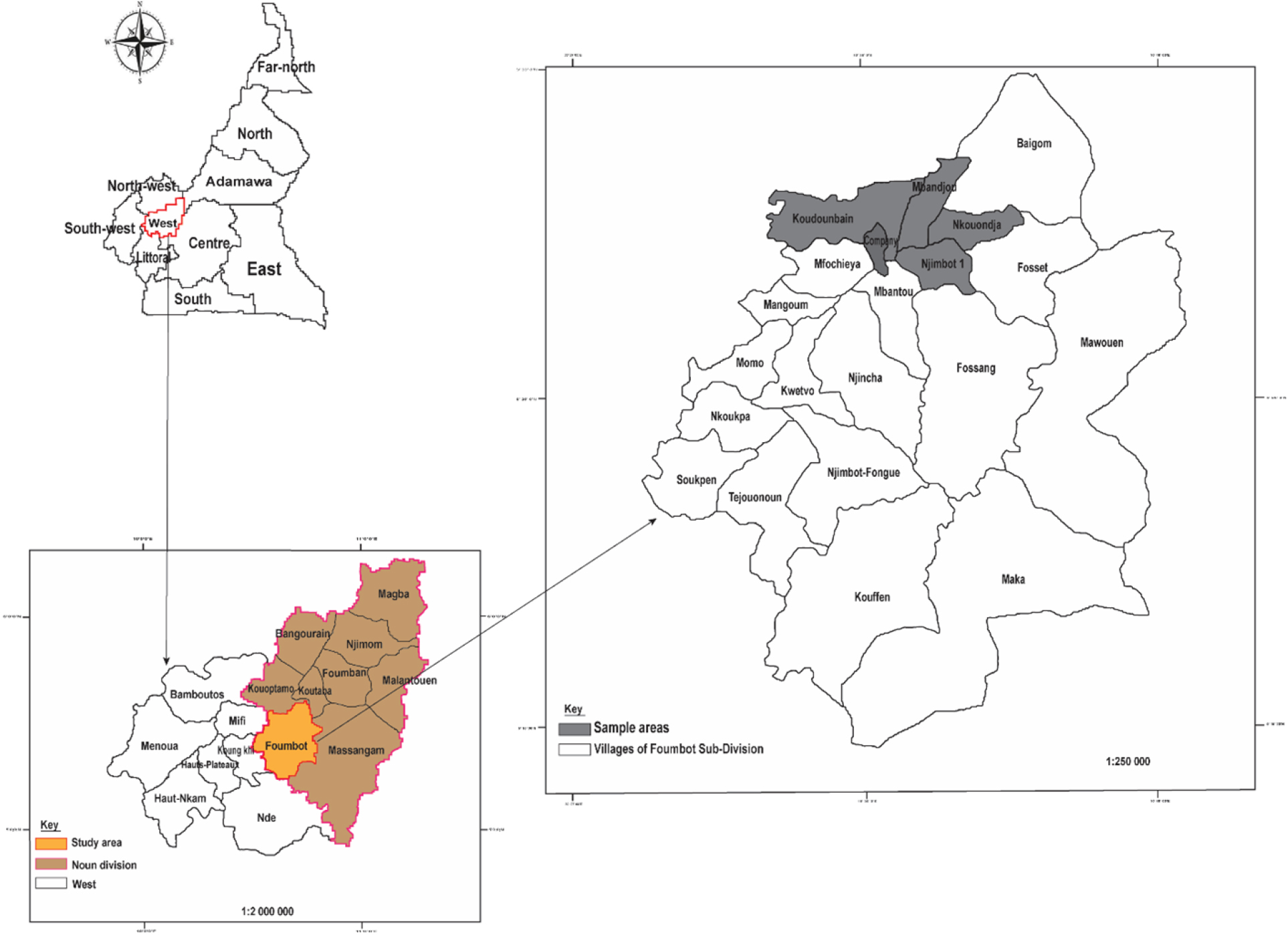
The soils in Foumbot, consisting of volcanic and ferruginous varieties, are highly fertile and well-suited for agriculture. The Noun River and streams such as Nkoup serve as the principal water sources, with wells and boreholes augmenting the water supply, particularly during the rainy season (CVUC, 2024). The landscape is dominated by savanna vegetation interspersed with grasses and sparse trees, along with significant agricultural land producing crops such as corn, cocoyam, bananas, coffee, and fruit trees like mangoes and avocados.
Farming is the main livelihood of Foumbot’s residents, complemented by small-scale livestock farming, trade, and handicrafts. Sociocultural influences in the community include a strong Islamic presence and a cosmopolitan demographic mix. Livestock farming primarily includes goats, poultry, pigs, and cattle, with goat farming conducted traditionally across many households (CVUC, 2024). The availability of groundwater in the Foumbot municipality is inferred from the extensive use of boreholes and shallow wells by household in the neighborhood. However, quantitative groundwater availability data such as groundwater level, aquifer yield, recharge rates has not been officially recorded by the government agency in this study area. Previous studies in the Cameroon west region primarily examine the groundwater occurrence and quality in a broader regional scale and not at site-specific data.
Methodological Approaches
In September of 2024, a pre-field survey was carried out to identify areas of focus for the main study and to highlight main areas of attention with relation to water-related concerns. The study was carried out between October 2 and October 18, 2024. Authorizations were secured from several local quarter heads in each of the chosen areas prior to group interviews and discussions to ensure cultural sensitivity and ethical conformity. Participants were given questionnaires to collect quantitative data about WRM practices, while group discussions provided a deeper qualitative understanding of the communities’ struggles and experiences. Observations were made to confirm and enhance the information gathered. A series of targeted focus group talks was conducted for this study in each of the five areas that were chosen: Company, Njimbot 1, Nkouondja, Koudounbain, and Mbandjou. These areas comprised populated and peripheral neighborhoods to ensure effective coverage.
Twenty participants were chosen at random from each of the sampled areas to take part in the conversations. Before moving on to the reflexive evaluation, which includes the interview procedure, we provided a brief explanation of stakeholder participation in WRM. The study team recognized their role as direct stakeholders and the necessity of establishing credibility as reliable facilitators in accordance with ethical standards (Jeffery, 2009). The study’s tasks included evaluating the municipality’s water supply as well as important water-related and management challenges. Questionnaires (100) were administered and structured into an open and closed-ended format. Throughout the interactions, the research team emphasized their non-neutral stance on the water management problem, making clear their interest in fostering equitable and sustainable water management.
Data Collection Procedures
To properly evaluate this study, information was gathered via questionnaires, observations, and interviews, along with photos for documentation. The participants were given structured questionnaires to complete in order to evaluate their water sources, treatment practices, and opinions regarding the quality of the water. The questionnaires’ main questions asked participants about their main sources of water, whether they thought their water source was safe to drink, whether they treated their water before drinking, and whether any family members had ever been ill from a waterborne illness (Kayser et al., 2019). 10 respondents from outside the study communities participated in a pilot trial of the questionnaire. Several questions were clarified, unnecessary elements were eliminated, and the general flow was enhanced in response to pilot feedback. The researcher was able to establish a relationship with the participants and elucidate the research topics through the use of interviews.
Key community members, such as water vendors, residents, and community heads, were all included in the interviews and group discussions. Focus was placed on topics such as the challenges and problems they face in accessing clean drinking water, traditional beliefs, household water treatment methods, and health concerns related to water quality, such as diarrhea and typhoid (waterborne diseases). First-hand knowledge was gained from direct field observations of water sources, and non-participant observation made it easier and less invasive to identify areas of water surplus and shortage. Direct observations included recording the physical state of water sources, whether they contained algae or waste products (general hygiene), and their closeness to possible contamination sources, including economic activity or agricultural fields, following established spot check observational approaches used to assess hygiene practices in water and sanitation studies (Ruel and Arimond, 2002). Data were further supplemented by reviewing relevant literature, including textbooks, journals, documents, internet sources, magazines, libraries, and materials from the Foumbot council.
Data Analysis
Data were categorized and quantified. The data were condensed into narrative descriptions, tables, bar graphs, statistical analysis, and images to give the reader a better understanding of the material. The settings and relationships were explained through narrative descriptions. Thematic analysis was used to examine the qualitative responses: transcripts were examined, codes were created, and recurrent themes were identified. Tables simplify numerical data and make it easier to comprehend. Graphs, charts, maps, and photographs not only simplify data but also offer visual appeal and facilitate comparison. Interviews, field notes, and all other data were gathered. Analysis was done using the statistical software R. After that, the Chi-square model goodness-of-fit test was used to evaluate the distribution of water resources in Foumbot municipality.
Chi-Square Analysis
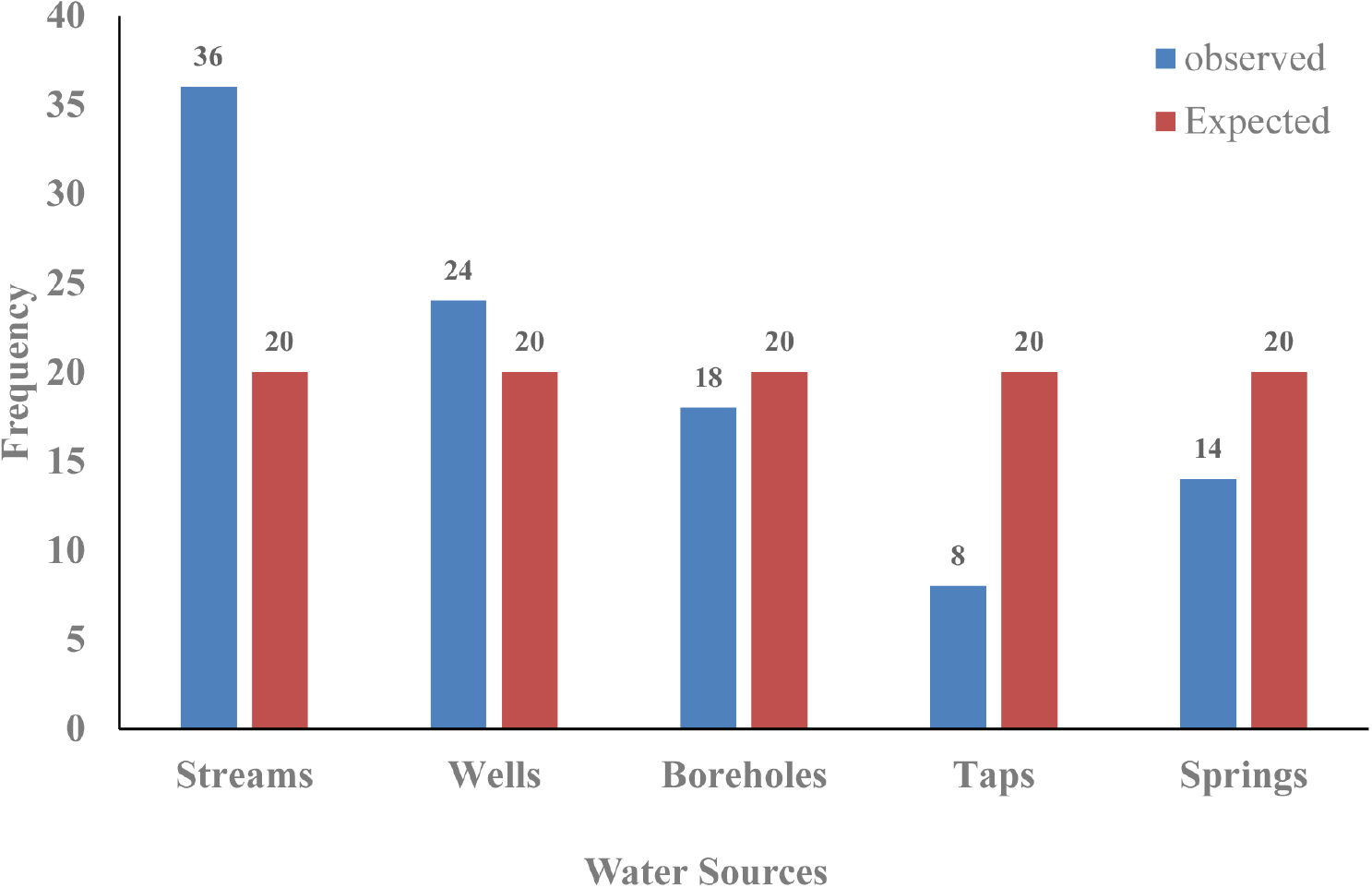
The Chi-square goodness-of-fit test was employed to statistically observe the abundance in the distribution of water sources (36 streams, 24 wells, 18 boreholes, 8 taps, and 14 springs) from the sampled population. The model is stated as:
where, represent the Chi square statistics, denotes summation, is the observed frequency of each water source category, and is the expected frequency, and is the total number of water source categories considered.
Procedure
Firstly, state the hypothesis you intend to test. Secondly, perform a summation of the total rows and columns and construct a table for both observed and expected frequencies. Next, establish the level of significance (0.05) and calculate the degrees of freedom using the formula (Rows-1) (Columns-1). Then compare the calculated chi-square statistics with the critical value from the chi-square distribution table (Maydeu-Olivares and García-Forero, 2010). Finally, decide based on this comparison whether to reject or accept the null hypothesis. To obtain the expected frequency or counts, the following formula was used:
where, is the expected frequency in row i and column j, is the total frequency for row i, is the total frequency for column j, and is the grand total of all observations.
Hypothesis
Ho: The municipality of Foumbot has an abundant distribution of water resources
Ha: The municipality of Foumbot does not have an abundant distribution of water resources
Decision Rule: If the p-value is less than the cut-off points of 0.05 significance level, reject the null hypothesis.
Results and Discussion
Stakeholders Involved in Water Resource Management
The stakeholders involved in WRM in this municipality were separated into two categories: indirect and direct stakeholders. The indirect stakeholders involve the government, municipality/council, international organizations, and NGOs. Government institutions such as the municipality, Ministry of Planning and Regional Development (MINEPAT), Ministry of Water and Energy (MINEE), Ministry of Public Health (MINSANTE), and the Ministry of Decentralization and Local Development (MINDEVEL) provide technical support through research and oversee the implementation of water laws and supply services.
NGOs and international organizations such as Korean Cooperation, the Islamic Development Bank, the African Development Bank, the French Islamic League for Education (LIFE), and Islamic Help promote the implementation of water and environmental sustainability programs, as well as aid in the building of wells and boreholes in the municipality (Fig. 2a).
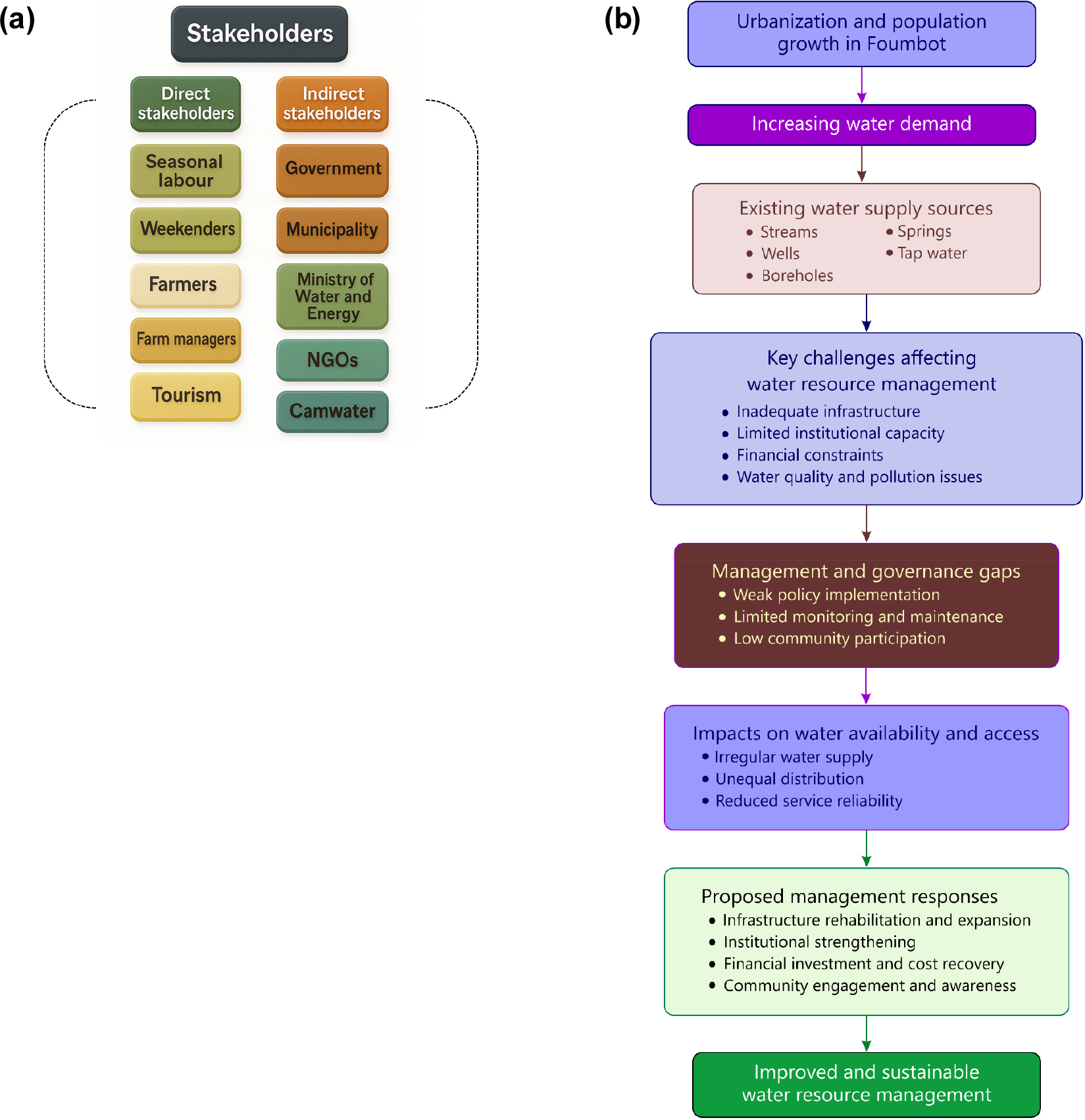
Camwater is responsible for the supply and marketing of tap water and infrastructure within the municipality. Direct stakeholders are the people who live in Foumbot. Generally, direct stakeholder classes are based on activities they are engaged in within the municipality. Farmers in the municipality own farms, which require large quantities of water for irrigation; residents live in the municipality; and weekenders are wealthy landowners who personally provide boreholes and wells for the community. Tourism operators use water resources for leisure activities, and village development associations also provide boreholes and wells in the community (Fig. 2a). Fig. 2b was included to show conceptual overview of the study structure, stating the connection among water resource management challenges with key stakeholders and proposed responses in the municipality of Foumbot (Fig. 2b).
Sources of Water
Using the WHO/UNICEF Joint Monitoring Programme (JMP) drinking water service ladder, the water sources in this study were categorized. Even when water quality testing is not conducted, this classification offers a foundation for determining the degree of access to safe drinking water. According to WHO and UNICEF (2021), the JMP classifies water sources into five categories: safely managed (free from contamination), basic water service (boreholes and protected wells), limited water service (public taps and shared wells), unimproved water sources (unprotected wells and springs), and surface water (rivers and streams) (Fig. 3). Results of the field survey attest that participants in this municipality use various water sources, including taps, boreholes, springs, streams, and wells (both open and closed) (Table 1). The popular water source accounts for 36% of participants relying on streams, 14% on springs, 24% on wells, 18% on boreholes, and 8% on taps for their water supply. On these grounds, the municipality of Foumbot highly relies on unimproved and surface water sources. This scenario further increases the concern about potential contamination and associated health risks. The heavy reliance of households on streams, springs and unprotected wells increases their vulnerability to waterborne diseases like diarrhea, typhoid, and cholera (cases of cholera have been reported recently) as surface water contamination has been identified as a major and underrecognized drinking water risk in Cameroon (Profitós et al., 2014). For example, Petiangma et al. (2022), in a study on water quality in the Noun Division, West Region of Cameroon, found that 5 water samples from laboratory analysis revealed E. coli concentrations of 11–100 MPN/100 mL from streams in Njimom and concentrations of heavy metals such as lead and sulfate. Streams are bodies of water where surface water flows through the channel’s bed and banks.
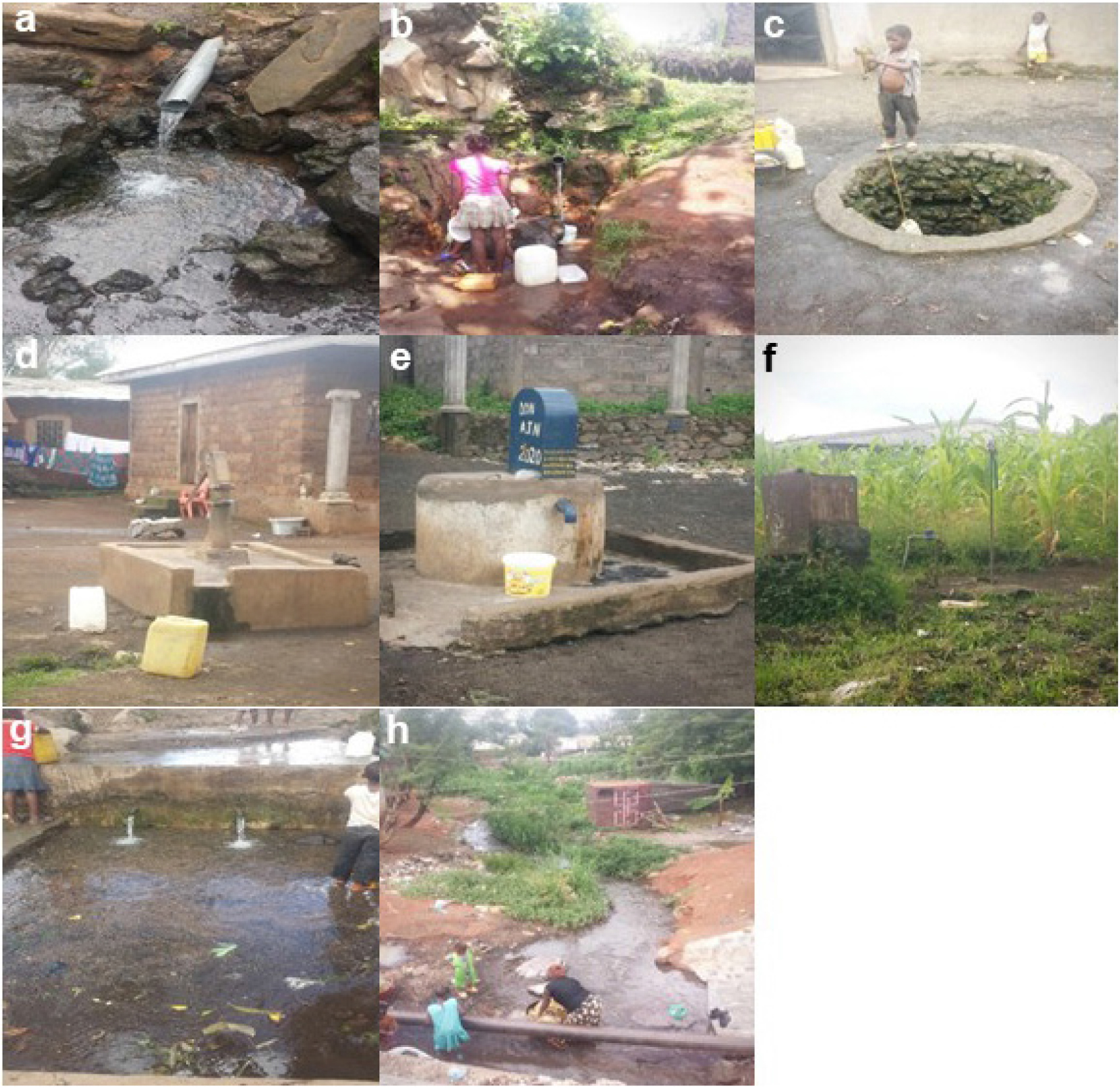
Table 1.
Distribution of water sources used by participants in Foumbot
| Water sources | Frequency |
| Streams | 36 |
| Wells | 24 |
| Boreholes | 18 |
| Taps | 8 |
| Springs | 14 |
| Total | 100 |
Groundwater, subterranean water, and surface water are dynamically interconnected and jointly control water availability and quality, with interactions between surface water bodies and aquifers playing a critical role in contaminant transport and resource sustainability (Valett and Reinhold, 2022). The area of Foumbot is characterized by several streams, such as “nkoup” and “nguo nguo,” and many others. Participants use wells, either deep or shallow, as their water source. The majority of the wells in this area are shallow and open, leading to contamination because they are undertaken based on individual finances and nonstandard methods. Boreholes are deep wells that utilize machinery to extract water. These boreholes are mostly provided by international organizations and NGOs. Boreholes are built to provide a water supply made by donations from charity organizations such as the French Islamic League for Education (LIFE). The absence of regular water quality checks and monitoring of these boreholes and protected wells still poses a threat to the population’s health. Taps are often assumed to provide safe drinking water, but in many cases public perceptions of tap water quality are shaped by irregular supply, taste, and trust in service providers, leading households to seek alternative sources (Saylor et al., 2011). Taps in the Foumbot municipality hardly flow regularly, and so inhabitants tend to seek other sources of water supply. Springs emerge when water flowing underground finds an opening. The poor harnessing of these water sources has led to contamination and a threat to human health and vitality through the outbreak of diarrhea and other water-borne diseases.
Water Management Body and Rating by Participants
The water management in the municipality of Foumbot is known as Camwater. It is located at Bantou behind the prison, and has its catchment at Koundoubain called “Chateau”. Despite a steady growth in the number of homes using tap water from 2015 to 2021, the cost of affording pipe water remains a challenge in this municipality (Table 2). The lowest price per cubic meter of water is 293/364 FCFA per m3 from Camwater.
Table 2.
Trends in household access and water production and consumption in Foumbot (Petiangma et al., 2022)
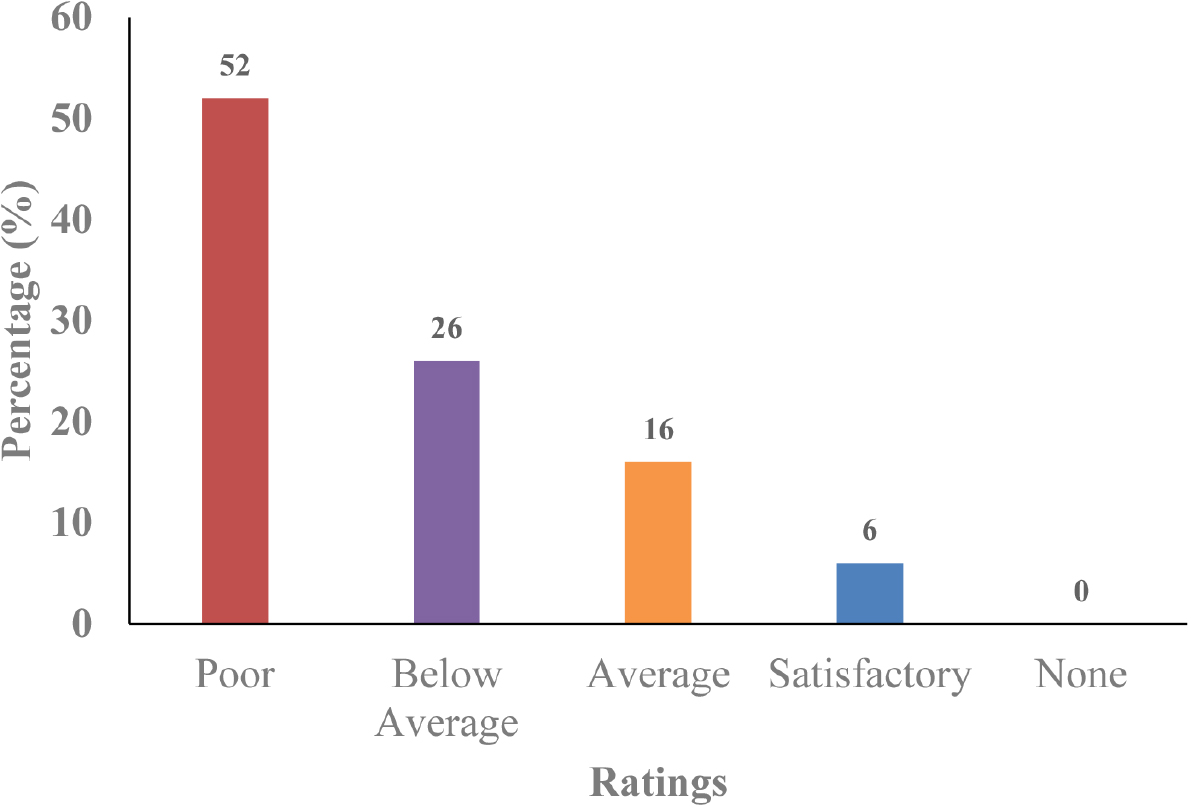
The installation fees of 192.850 FCFA (20 m diameter pipe) and 268.013 FCFA (40 m diameter pipe) for residences at 50 m and 117.245 FCFA (for 20 m diameter pipe) and 176.632 FCFA (for 40 m diameter pipe) for distances between 0 and 5 m raise the prices and deter customers. Electricity shortages and outages are the reason for the inconsistent water flow frequency from taps in this area. In terms of Camwater’s assessment, 52% of participants rated the management body as poor, 26% as below average, 16% as average, 6% as satisfactory, and none as exceptional (Fig. 4). The limited water storage tanks in the municipality hinder Camwater from routinely providing water to Foumbot’s growing population around the clock. Furthermore, the pipes installed are too tiny to adequately supply water to the whole population regularly.
Challenges Faced in Water Supply and Management
Broken Pipes
Leaks in pipelines result in the waste of water. The situation worsens to the point where thirsty people often form lines around damaged pipes to obtain this valuable liquid. We blame this issue on the lack of accountability and the Camwater employees’ failure to regularly inspect their infrastructure in different communities, as ineffective communication and coordination during planning and execution stages often undermine infrastructure performance and maintenance (Galli, 2022). The system rapidly deteriorates due to inadequate maintenance, which also affects the management and control of its operation. Digging up streets and ruining property in the search for pipes and valves can also cost a significant amount of time and money. Typically, a mechanical or manual inspection mechanism is used to control water losses (Fontana and Morais, 2016). The mechanical system of inspection necessitates the use of water meters and gauges, which are beyond the means and capabilities of many small towns due to their maintenance and attention requirements. These pipes are also old and sometimes poorly laid, where cars drive by, which leads to pipe breakage. Additionally, the public is held accountable for failing to notify authorities promptly, which would have allowed for the eventual repair of broken pipes. Consequently, WRM necessitates collaboration among all parties involved.
Energy Crisis
A stable electricity supply is necessary for effective WRM. Regular power outages, whether caused by fallen power poles or cable malfunctions, are problematic since the equipment for water distribution relies heavily on energy to run efficiently. Water shortages, water cuts, and water rationing are caused by the aforementioned issues. As a result, some neighborhoods may experience weeks without water, which negatively impacts livelihoods and forces residents to rely on contaminated water sources, thereby contributing to the spread of waterborne illnesses among the population.
Increase in Population
When calculating population growth, it is vital to take into account various elements, including the location, the current and potential growth of agriculture, which is the main source of the population; and the potential for adjacent industries to be established. The population of this municipality has grown rapidly due to a combination of early marriages, population influx, and increased human activity. The Anglophone crisis, which has been plaguing Cameroon’s English-speaking regions for more than seven years, has caused more internally displaced people to seek safety in this municipality, placing further strain on the municipality’s water supplies. Many vices, such as improper waste disposal into streams and rivers, are typically brought about by large populations, which ultimately results in pollution. Plastic waste from disposed plastic products might be fragmented over time, leading to microplastic production, which has been shown to cause several effects in the human body, such as oxidative stress, endocrine disruptions, toxicity, and inflammation (Atem et al., 2024; Chia et al., 2024; Lee et al., 2024; Bello et al., 2025). Pollution upstream eventually impacts the downstream water quality, resulting in infections and ailments, including cholera, typhoid, diarrhea, and runny stomach, that impact the population’s health (Lin et al., 2022). Since most people in Foumbot are farmers, chemical fertilizers have become increasingly popular in farmlands in an effort to maximize harvests, reflecting similar agricultural practices and perceptions observed among farming communities in Cameroon (Nguatem Tayoh et al., 2016). Lack of funds
In low-income countries, WRM often faces challenges due to a lack of financial means and assistance. The body in charge of water management (Camwater) lacks funds to equip itself with large storage tanks to increase the quantity of water supply and to acquire a highly efficient standby generator in the event of power cuts. Furthermore, the inhabitants are poor and lack the means to afford highly treated boreholes. The central government should provide funding for the development of small rural water projects. The central government typically has to provide funding for water projects because most rural towns and villages lack credit, and there is no framework in place to finance public works through direct loans from private banking institutions. Additionally, the community is expected to provide labor, land, local materials, and some services for the water project, as these can be acquired locally and are frequently extremely affordable for the community.
Government Policies
Successful rural water supply initiatives around the globe make it abundantly evident that the highest levels of central government administration must take action. They provide a large portion of the financial and technical resources needed to develop public water supplies. In Cameroon, the central government alone has the authority to control water, and decrees have been the main authoritative tool up to this point. Furthermore, serious follow-up and implementation are absent from these decrees by the government. Cameroon’s inconsistent institutional frameworks and regulations hinder future water development plans. Although decrees are occasionally issued to manage water resources, there is currently no comprehensive water legislation. Many supply systems allocate water based on past availability or current demands, rather than maintaining supply in accordance with present or future availability.
Climate Change
Water resource management faces numerous challenges as a result of climate change, including infrastructure damage, water-related dangers, water scarcity, and water quality issues (Ciampittiello et al., 2024; Noh et al., 2024). Climate change-induced droughts cause an average annual damage of at least $60 billion worldwide (Ma et al., 2017). The frequency and intensity of natural disasters like hurricanes and floods are rising due to climate change, which is also making water increasingly scarce and unpredictable. Fecal waste or saltwater from these catastrophes may contaminate water supplies. Rising temperatures are disrupting the water cycle and patterns of precipitation. Infrastructure related to water and sanitation, including water points, wells, toilets, and wastewater treatment plants, can sustain damage from extreme weather events.
Chi-Square Analysis Results
To perform this analysis, we assumed that the use of different water source types in the municipality was evenly distributed. The expected frequency was set at 20 for each water source category (Fig. 5). This was done by dividing the number of observations (n = 100) by the number of water source categories (streams, wells, boreholes, taps, and springs). Using the chi square goodness of fit test, with a degree of freedom of 4 and a significance level of 0.05, the critical value was 9.488, while the calculated chi square value was 22.8, with a p value of 0.0001388. Since the p value is lower than the level of significance (0.05), the null hypothesis was rejected, indicating that the distribution of water source types used by households in Foumbot is uneven. This uneven distribution reflects challenges in water access, which are often associated with low living conditions and waterborne diseases such as diarrhea and cholera.
Conclusion and Recommendations
Water is vital for bodily and economic functions. The inadequate and poor distribution of water in the Foumbot municipality is attributed to factors such as degradation of sources, population influx, climate change, and poor management. The Foumbot Municipality’s increasing pace of rural development is accelerating the emergence of an urban environment. This growth, along with the associated pressure on local populations and poor management, will continue to pose challenges with respect to the provision of water supply to the population both now and in the future. Despite the considerable attention paid to water demand and use over the years, inadequate water supply remains one of the major challenges to the inhabitants of the Foumbot municipality. To properly address water shortages and supply in this municipality, more research is required to highlight the importance of thorough monitoring and mitigation strategies, such as catchment rehabilitation and sustainable water management practices.
(1) For Foumbot’s water management to be sustainable, catchment rehabilitation is crucial. Rapid population increase and land-use changes have severely deteriorated local catchments, lowering the amount and quality of water. Prioritizing adequate protection and restoration procedures, such as reforestation, soil preservation, and the creation of buffer zones for protection around catchment areas, will help address this.
(2) Camwater’s current distribution system and storage tanks are not enough to handle the demands of Foumbot’s quickly expanding population. Several decades ago, these facilities were sufficient, but the present population growth has exceeded their intended capacity. Upgrading and expanding distribution pipes and storage facilities in accordance with current and anticipated population expansion is necessary to address this issue.
(3) Instead of penalizing households with no toilets, local councils, in partnership with NGOs, donor agencies, and microfinance institutions, can team up together to support low-cost household latrine construction. Furthermore, all other activities should be prohibited around these streams to restore their purity.
(4) Water wastage due to leakages has contributed to a reduced water supply, leading to rationing. These pipes should always be monitored, and in case of leakage, the local population should immediately report to Camwater authorities to resolve the problem. Also, pipes should be laid sufficiently deep into the ground so that cars and other tillage activities like grading of roads should not cause damage to the pipes and burst them. Furthermore, Camwater should have an efficient and effective standby generator that comes into action during periods of prolonged electricity cuts.
(5) For Foumbot’s water management to be effective, Camwater, the local community, and the municipal government must work closely together. The main goals of this collaboration should be to identify problems together, create new catchment sources, and ensure the sustainable use of current ones. Polluting activities and inappropriate waste disposal must be tightly controlled to protect water quality. These activities must be done in conjunction with community education initiatives, local awareness, and involvement to promote responsible behavior.