
Research Article

The Journal of Engineering Geology. June 2017. 153-164
https://doi.org/10.9720/kseg.2017.2.153

ABSTRACT


MAIN

  • 서론

  • 지반함몰 영향인자

  •   지하수위 변동

  •   굴착 중 침하계측

  •   흙의 종류 및 전단강도

  •   암반에서의 암석종류

  •   굴착공사 시 지하수 처리

  •   암반내에서 주단열과의 거리

  •   상재하중 심도 및 두께

  •   코어암질지수(RQD)

  •   액성한계

  •   상대밀도

  •   투수계수

  •   굴착심도 및 흙막이 벽과의 거리

  •   함수비

  •   하천과의 거리 및 심도

  •   인공시설물 유무 여부

  •   강우 강도

  •   흙막이 벽을 통한 토립자 유실 여부

  •   토사와 암반 경계에서의 배향 및 심도

  •   흙의 건조단위중량

  •   기타 인자

  • 토의

  • 결론

서론

굴착공사 중 지반붕괴나 도심지에서의 땅 꺼짐 현상과 같은 지반함몰 현상은 경제적인 손실 뿐 아니라 국민의 안전을 위협할 수 있기 때문에 최근 사회적 관심도가 높아져가고 있다. 이와 같은 지반함몰 피해는 건설공사 지역의 특성을 고려한 설계를 통해 대비가 가능하고 그 피해를 줄일 수 있다. 하지만 국내 건설현장에서 지반조사가 제대로 수행되지 않는 경우가 많고, 지질 특성에 따른 지반함몰 양상이 다양하기 때문에 적절한 설계를 위한 지반 조사가 수행되는데 어려움이 있다. 국외의 경우 지질특성에 맞는 대책 연구가 수행되었으나, 국내의 지질특성 및 지질 구조가 외국과 차이가 있어 기존 국외의 연구를 국내에 적용 시키는 것에 무리가 있으며 국내 지질은 외국에 비해 다양하고 복잡한 지질 및 지반 구조를 가지고 있다. 이러한 이유에서 국내 지질 특성을 반영한 지반함몰 위험성을 평가하고 예측할 수 있는 도구 개발이 필요하다. 이를 현장에서 실무자들이 적용할 수 있도록 한다면 굴착공사 중 지반함몰 피해를 감소시킬 수 있을 것으로 기대된다. 지반함몰 위험성 평가 도구를 개발하기 위해서는 다양한 지질특성에 따라 다르게 적용되는 영향인자들을 분류해야 하고, 각 영향인자에 대한 신뢰성 역시 확보되어야 한다. 본 연구에서는 국내외 200여편의 논문과 다수의 외국 정부기관 문헌을 분석 및 검토한 결과를 바탕으로 지반함몰 영향인자를 도출하고, 국내 지반특성에 따라 적용할 지반함몰 영향인자를 분류하여 도출 및 제시하였다.

지반함몰 영향인자

약 22개의 지반함몰 영향인자를 도출하여 분석에 사용한 논문과 문헌에 인용된 빈도수에 따라 상대적인 중요도를 설정하였다. 지반함몰 영향인자 간 상대적인 중요도 순서는 지하수위 변동(fluctuations), 굴착 중 침하계측, 흙의 종류, 암반에서 암석의 종류, 굴착공사 시 지하수 처리, 주 단열과의 거리, 상재하중 심도, 상재하중 두께, 전단강도, RQD, 액성한계, 상대밀도, 다짐도, 투수계수, 굴착심도 및 흙막이 벽과의 거리, 함수비, Main Channel과의 거리, 인공시설물 유무, 강우 강도, 흙막이 벽을 통한 토립자 유실 여부, 토사와 암반 경계에서의 배향 및 심도, 흙의 건조단위 중량, 기타인자 등으로 분석되었다(Table 1).
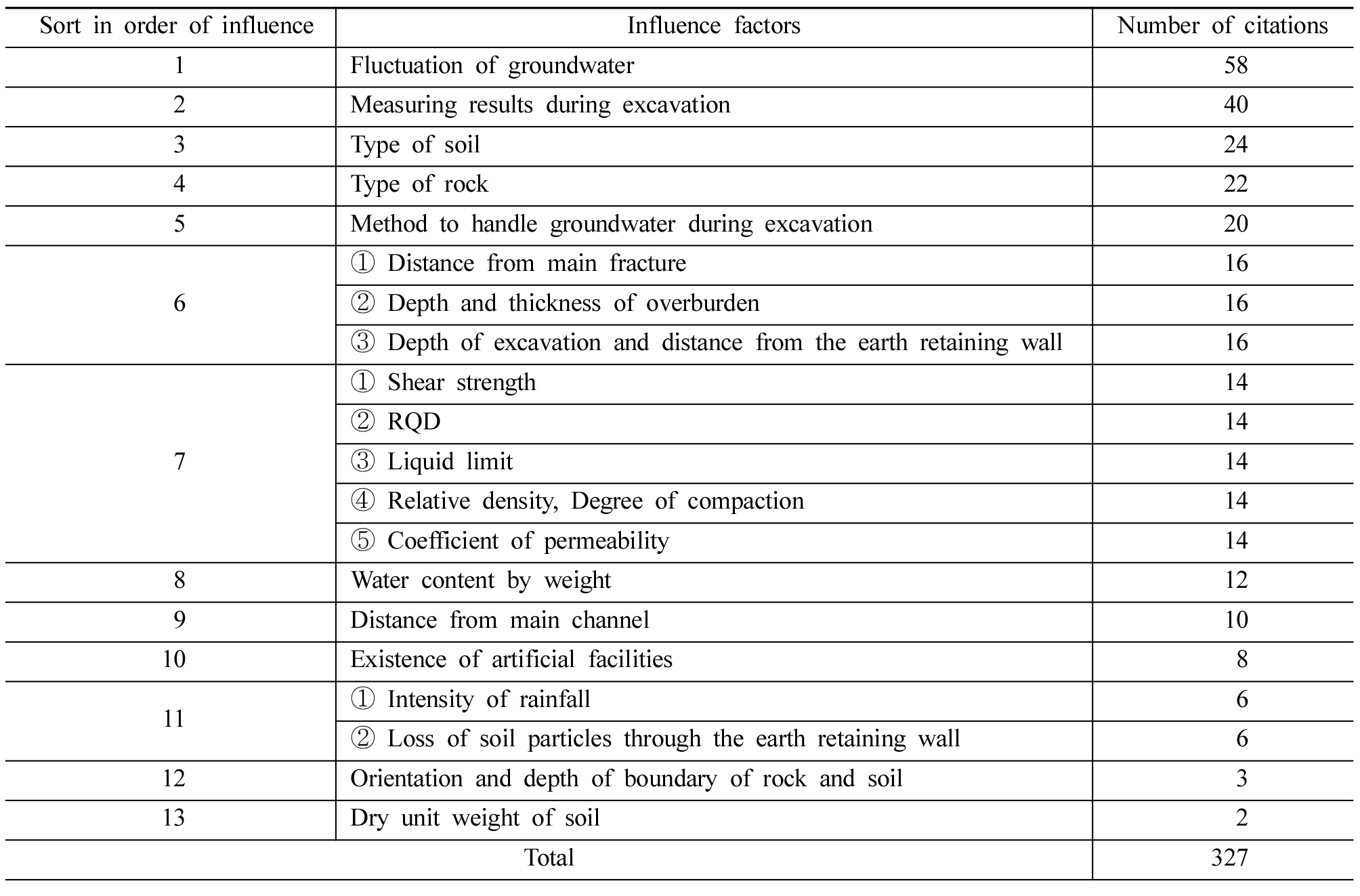
Table 1. Classification of ground subsidence factors.

http://static.apub.kr/journalsite/sites/kseg/2017-027-02/N0520270205/images/kseg_27_02_05_T1.jpg

국내외적으로 지반함몰이 발생한 지역이나 지반침하가 심하게 발생한 지역 및 지반파괴가 대규모로 일어난 지역의 지반특성을 나타낼 수 있는 지반 물성 값이나 지반계측 자료가 충분히 확보되면 지반 데이터베이스(DB)를 활용하여 객관적으로 정량화한 지반함몰 영향인자를 추출하는 것이 가장 이상적이다. 그러나 현실적으로 지반함몰이나 지반파괴가 발생한 지역의 현장 기관에서 지반 DB를 제공받기가 매우 어렵고, 특히 국내 현장 기관의 경우는 지반 DB가 많이 왜곡되었거나 지반 DB 제공을 거의 받을 수 없는 실정이다. 따라서 본 연구에서는 국내외 검증된 약 200여 편의 논문과 여러 국가 기관에서 실행하고 있는 지반함몰 및 지반파괴 관리에 관한 수 십 건의 문헌을 수집하여 지반함몰에 미치는 영향인자를 분석 및 검토하여 지반함몰 위험을 평가할 수 있는 도구를 만들기 위한 중요 지반함몰 인자22개를 추출하였다(Table 2). 지반함몰 인자 간 상대적인 중요도 순서에 따라 가장 중요도가 높은 지하수위 변동 인자부터 중요도가 상대적으로 낮은 기타인자까지 상세히 기술하였다.
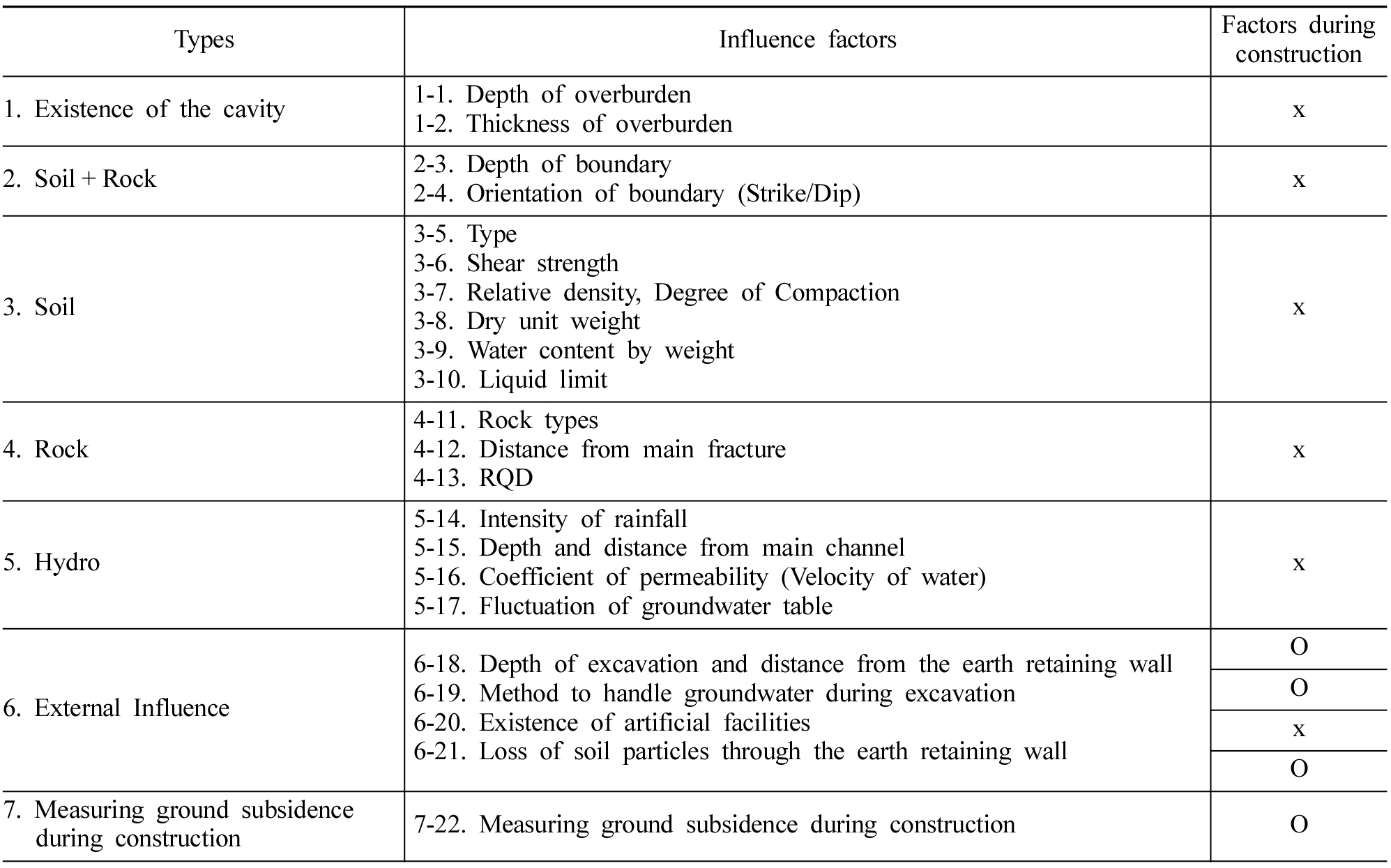
Table 2. Factors of ground subsidence risk due to geotechnical characteristics.

http://static.apub.kr/journalsite/sites/kseg/2017-027-02/N0520270205/images/kseg_27_02_05_T2.jpg

지하수위 변동

지반침하 및 함몰은 기본적으로 대상지반에서의 역학적 평형상태가 무너지면서 발생한다. 이러한 지반의 역학적 평형상태를 깨뜨리는 요인으로는 인위적인 터널굴착이나 상재 건물의 건설, 지하수위의 변동을 들 수 있다(Seong and shin, 2008; Moormann and Moorann, 2002; Vilar and Roger., 2011). 지하수위가 저하되면 지중 내 부력효과를 감소시켜 토사에 작용하는 유효응력이 증가하게 되는데 토압이 증가하면 늘어난 압력 크기만큼 흙이 압축되고 이는 곧지반 침하로 이어지게 된다. 또한 지하수는 암석의 일축압축강도를 저하시키게 되므로 침하를 촉진하는 원인이 되기도 한다.

지하수위 변동의 원인은 자연적인 강우를 포함하여 인위적인 지하수 펌핑을 들 수 있다(Choi, 2005; Shi and Bao, 1984; 1984a; Yamamoto, 1984b; Yamamoto, 1984c; Figueroa, 1984; Paul, 1984; Soki, 1984; Newton, 1984; Gabrysch, 1984; Poland and Lofgren, 1984; Poland, 1984; Carbognin et al., 1984). 대수층에 존재하는 점토나 실트와 같은 작은 입자의 퇴적물은 지하수 펌핑에 의한 지반침하의 가장 대표적인 요인이라고 할 수 있다(Yetton, 1986). 지하수 펌핑이나 다른 요인에 의해 지하수위가 하강하면, 입자간의 공극압력이 줄어들고 공극 압력이 축소됨에 따라 무작위로 배열되어 있던 판상의 퇴적물 입자들이 다시 압축, 재배열되며 공극률도 줄어들게 된다(Perrin et al., 2015; Kwon and Lee, 2001; Choi and Kim, 2015; Tan and Li, 2011; Xiancai et al., 2014; Min and Lee, 2014; Cheng, et al., 2013; Gloe, 1984; Carbognin et al., 1984; Yamamoto, 1984a; Ciotoli et al., 2016; Zhang et al., 2013).

지하수위 변동은 지반내부의 침식과정을 촉진시키는 역할을 한다. 7일간 0.4m 폭의 수위 변동이 지속될 경우 지반함몰이 유발될 가능성이 있으며 수위변동의 폭은 0.4m 이상 유지될 시 붕괴 가능성이 크다(Bruno and Calcaterra, 2008; Thinh and Ludmila, 2015).

굴착 중 침하계측

굴착 중 실제로 측정되는 침하량을 이용하여 지반함몰의 위험성을 판단 할 수 있다. Korean geotechnical society (2007) 에서는 인접도로, 지하철, 매설물, 인접 건물 등의 손상 한계 및 허용 침하량을 초과하지 않아야 한다는 관리 기준치를 제시하고 있는데, 굴착공사 전 예측된 침하량을 실측 침하량이 넘지 않을 경우 안정하고 실측 침하량이 허용침하량을 넘어설 경우 위험한 상태로 볼 수 있다(Table 3). 이뿐 아니라 굴착공사 중 계측된 침하량은 지반함몰을 판단하는 기준으로 이용되는 연구가 많이 진행되었다(Kuliczkowska, 2016; Kim, 2016; Kwon and Lee, 2001; Kwon and Park, 2001; Wang and Xu, 2014; Min and Lee., 2014; Toan and Luu, 2007, 2010; Liu et al., 2011; Soki, 1984; Tan and Li, 2011, Wang and Xin, 2015; Nikolinakou et al., 2011; Poulsen and Shen, 2013; Liu et al., 2005; Hou et al., 2015; Seo et al., 2009; Leung and Charles, 2007; Finno and Michele, 2005, Shao and Emir, 2008; Wei and Jun, 2013; Roboski and Richard, 2006).

Table 3. Risk criteria for the measured ground subsidence.

http://static.apub.kr/journalsite/sites/kseg/2017-027-02/N0520270205/images/kseg_27_02_05_T3.jpg

흙의 종류 및 전단강도

통일 분류법에 의한 흙의 분류가 흙의 공학적 성질을 대변해 주기 때문에 흙의 종류를 확인함으로써 침하 발생 가능성을 예측 할 수 있다(Perrin et al., 2015; Kwon and Lee, 2001; Vilar and Roger, 2011; Cheng et al., 2013). 주로 연약 점토(Seong and Shin, 2008; Tan and Li, 2011), 연약 중간 점토(Finno et al., 2002), 점토질 토사(Lee and Lee, 2014; Yetton, 1986; Karim, 2005; Reddy and Jeffrey, 2001)에서 침하가 발생하는 것으로 연구되었다. 흙은 종류에 따라 침식률(erodibility)과 가소성(plasticity)이다르며 세립질, 균일, 느슨한 모래가 침식률이 다소 높다. 점토 함량이 높으면 침식률이 감소하고 침식률과 가소성은 반비례하는 경향을 보인며 점착성 없는 흙에서 침하가 빨리 발생하게 된다. Lamb and Shiau (2014)에 따르면 토사의 전단강도는 싱크홀 형성과 밀접한 연관성을 가지고 있으며 일반적으로 점착력과 마찰각을 동시에 갖고 있는 흙이 비배수 강도를 갖는 점토나 배수상태의 모래에 비하여 더 높은 안정성을 보인다. Vilar and Roger (2011)는 붕괴지반의 특성으로 낮은 전단강도를 실내 실험으로 검증하였다. 전단강도는 하부의 지반이 유출되어 공동이 발생하여도 지반함몰이 즉각 일어나지 않도록 지지해준다. Hu et al. (2003)은 상하이 도시철도 터널의 깊은 굴착에서 펌핑 강화를 통해 점토의 전단강도를 증가시켜 토양의 변형을 제어하였으며, Shu and Baosong (2015)는 시추공의 붕괴에 전단강도의 인자인 마찰각과 점착력이 주요하게 작용한다고 제시하였다. Table 4에서는 Vallejo and Ferrer (2011)가 제시한 점토의 비 배수 전단강도에 따른 지반의 상태를 보여준다.
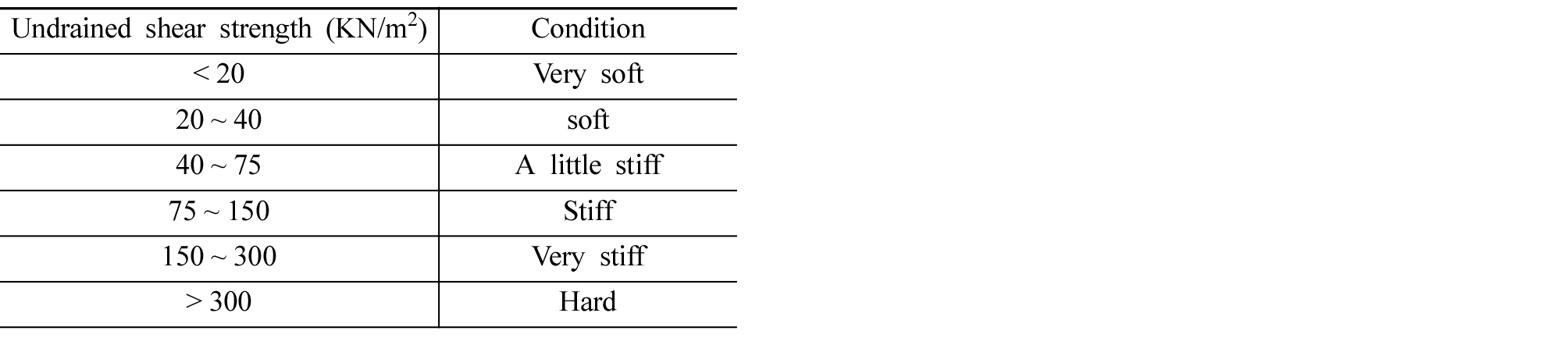
Table 4. Undrained shear strength and clay condition.

http://static.apub.kr/journalsite/sites/kseg/2017-027-02/N0520270205/images/kseg_27_02_05_T4.jpg

암반에서의 암석종류

석회질암석과 비석회질암석으로의 암석 구분은 개착굴착에 대한 함몰 영향인자라기 보다는 자연적인 지하공동 발생에 의한 함몰 영향인자로 볼 수 있다. 기반암이 증발잔류암일 경우 공동은 기반암 분포 면적의 30%를 점유하며 암종에 따른 구조, 강도, 마모정도 등이 지반함몰에 어떻게 작용하는지에 대한 연구가 진행되었다(Tudes, 2012; Bell et al., 1995). 그러나 암반 특성에서는 탄산염암 등 지하수에 의해 용해되는 특징을 가진 암석과 그로 인해 생성되는 공동 조사와 카르스트 공극 조사가 주된 지반안전 문제로 다뤄지고 있다(Shin and Park, 2004; Muhammad et al., 2012; Ciotoli et al., 2016).

지반함몰의 취약성은 암석의 강도, 용해도, 산도 및 연성도에 따라 좌우된다. 암석을 구성하고 있는 성분에 따라 지반함몰 취약성 정도를 분류하면 증발잔류암, 탄산염암, 점토질 암의 순서로 지반함몰의 취약성을 알 수가 있다. 지반함몰의 취약성을 암석의 종류로 구분하여 분류하면 석고, 암염, 석회암, 고회암, 석회질셰일, 탄질셰일, 이암의 순서로 지반함몰의 취약성이 낮아짐을 알 수 있다(Jesus and Francisco, 2008).

굴착공사 시 지하수 처리

지하수위를 굴착면 이하로 저하시키는 배수공법과 굴착주면 및 배면을 불투수성으로 처리하여 지하수가 굴착공사장 내로 흘러드는 것을 막는 지수공법이 있다. 배수공법의 경우 주변 지반의 압밀을 초래할 수 있고, 지수공법을 적용할 경우 굴착 저면에 보일링 현상이 발생할 수 있으며 수압이 흙막이 벽에 작용한다(Park, 2015; Cho and Lee, 2014; Yoo, 1999; Choi and Baek, 2016; Figueroa, 1984; El-Nahhas et al., 2006; Wang et al., 2009; Long, 2001; Yoo, 2001).

암반내에서 주단열과의 거리

일반적으로 개착굴착 규모는 그리 크지 않으므로 주 단열에서 일정거리를 벗어난 지역은 일반적인 암반층으로 볼 수 있다. 일반적인 지반은 대체로 안전하지 않기 때문에 Lee and Lee (2014)의 연구에서는 지반침하의 위험도를 작성할 때에도 암반 지반에서의 불연속면을 위험도에 포함하였다. 암반에 불연속면이 존재할 경우 일반 암반과 파괴 양상이 판이하게 다르고 단층, 파쇄대, 단열대 등의 주단열대에 대한 연구도 진행되어 있으므로(Perrin et al., 2015; Shin and Park., 2004; Tudes, 2012; Bell et al., 1995) 주 단열과의 거리를 지반함몰 영향 인자로 적용하는 것이 타당하다.

상재하중 심도 및 두께

굴착공사 중 지반함몰을 일으키는 주요한 지질 특성으로는 공동의 유무가 있다. 일정 규모 이상의 공동(토사 지반: 10cm×10cm×10cm 이상, 암반 지반: 1m×1m×1m이상)이 존재할 경우 상재하중(overburden)이 지반함몰의 주요 영향인자로 작용한다. Singh (2007)는 포트홀(pot-hole) 침하에 대해 물성이 약한 상재하중과 물로 포화된 상재하중이 지반함몰을 유발한다고 제시하였다. 즉, 지하의 공간으로 표토층이 변위되어 들어가고 그로 인해 주변의 토양과 암석의 측면이동을 유발시켜 지반함몰을 일으킨다. 공동의 생성은 메탄가스의 생산(Yamamoto, 1984d), 지하수위 감소로 인한 싱크홀(Newton, 1984), 유전에서 물의 유출로 인한 국지적 침하(Poland and Lofgren, 1984), 석회암의 용해(Ciotoli et al., 2016), 동굴(Woo et al., 2013), 광산(Poulsen and Shen, 2013), 굴착공사(Finno, 2002)로 생성되었고, 표토층의 두께와 심도가 지반함몰의 영향인자로 작용하였다.

코어암질지수(RQD)

암반층에서는 절리의 발달한 정도가 영향인자로서 반드시 적용되어야 할 사항이다(Bell et al., 1995). 이를 반영하는 단열밀도와 RQD가 영향인자로서 적절하다.

액성한계

액성한계 또는 소성지수가 증가할수록 내부 마찰각은 작아지나 점착력은 증가하는 경향을 보인다(Fang, 1991; Prakash and Sridharan, 2006). 함수량이 많을수록 체적의 증가와 액성의 성질을 띄게 되고 함수량이 적을수록 체적의 감소와 고체상으로 변화하게 된다. 액성한계는 이 중 흙이 소성상태로부터 액성상태로 변하는 순간의 함수비를 의미한다. 액상화는 낮은 강도와 높은 함수량을 가질 때 지진으로 인해 그 피해가 증가하는 사례가 관찰되고 있다(Tudes, 2012; Dobrescu and Siminea., 2009; Jonathan et al.,2004). 이와 같은 액상화로 인한 피해에 대처하기 위해 토사수분특성 곡선을 이용하여 토사의 액상화를 예측하고 DPS-CFD 접근법을 이용하여 액체 유동화에서 총 반전현상을 조사하는데 사용한다(Fredlund et al., 2011; Zhou and Yu, 2009).

상대밀도

Oh and Ahn (2016)의 연구에서는 토사의 상대밀도가 느슨할 때 큰 지표 침하가 발생하는 것을 확인하였다. Lee and Kim (2016)의 연구에서는 CCTV와 GPR 조사를 통해 다짐이 부족한 토사지반에서 공동 및 침하가 발생하는 것을 관찰하였다. 압밀을 통해 다져진 토사 지반은 전단강도가 증가하고(Huang and Song, 2013), Yoon and Ahn (2011)은 압밀 실험을 통해 다짐이 진행된 토사의 개량 효율을 제시하였다. 하지만 지하수 사용으로 인한 지하수위의 변화나 석유와 가스 개발 지역에서 기름과 물을 함유한 모래와 미세입자의 경우 압밀 작용으로 상대 밀도는 증가함과 동시에 지반 침하가 발생할 수 있다는 점을 유의해야 한다(Gabrysch, 1984; Poland and Lofgren, 1984). 토사의 상대밀도는 SPT 시험을 통한 N값으로 추정 할 수 있고, Gibbs and Holtz (1957)는 조립토(세립토 포함율 12% 이하)에서 N값에 따른 상대 밀도와 마찰각을 제시하였다. Table 5는 관입 저항치 N값의 크기에 따라 변화되는 조립토의 상대밀도와 마찰각을 보여주고 있다.

Table 5. Relative density for N values in granular soils.

http://static.apub.kr/journalsite/sites/kseg/2017-027-02/N0520270205/images/kseg_27_02_05_T5.jpg

투수계수

투수계수는 입자의 구성에 따라 달라지는데 Powers(1992)는 통일 분류의 토사 종류에 따른 투수계수를 Table 6과 같이 제시하였다. 투수계수가 높을 경우 지반내의 지하수위의 변화의 폭이 커지고, 심한 경우 토사의 유출도 일어날 수 있다. Casagrande (1938)는 투수계수 기준에 따라 10−4cm/sec 이하의 투수계수를 가지는 것이 안전하다고 설명하였다(Perrin et al., 2015; Kim, 2014; Kwon et al., 2001; Lee and Lee., 2014; Shin and Park., 2004; Sakai and Maeda, 2009; Reddy et al, 2001).
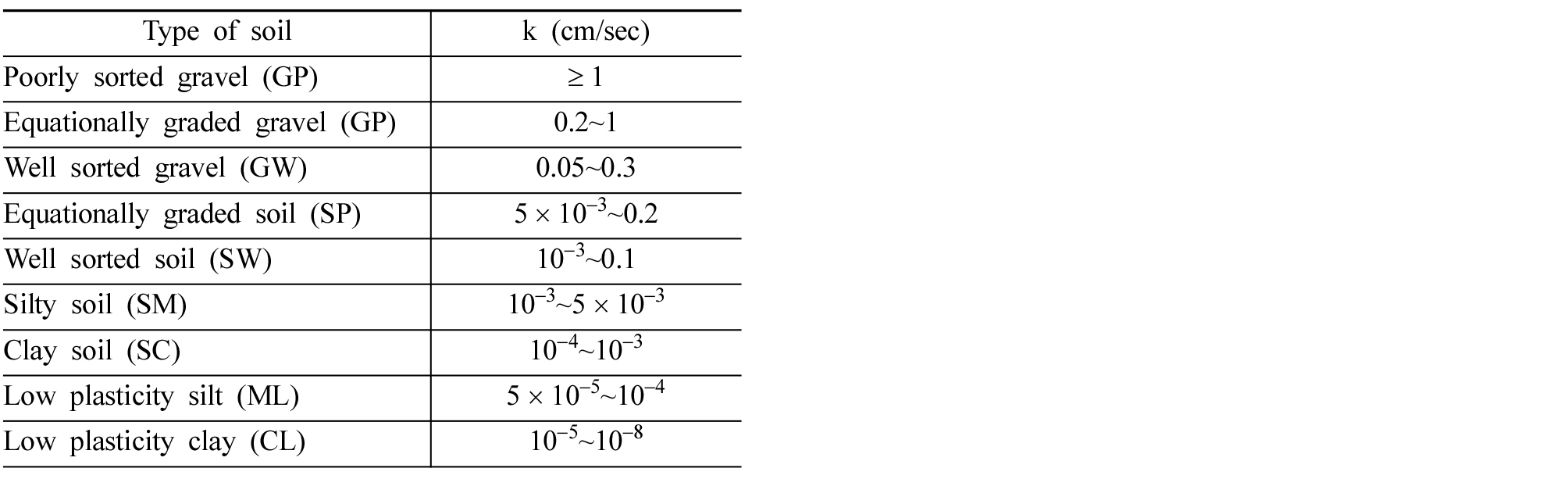
Table 6. Coefficient of permeability according to soil types.

http://static.apub.kr/journalsite/sites/kseg/2017-027-02/N0520270205/images/kseg_27_02_05_T6.jpg

굴착심도 및 흙막이 벽과의 거리

굴착 깊이와 지반침하가 관계가 있다는 것은 Yoo and Kim (2007), Boone (2004), Wang and Xin (2015) 등의 연구를 통해 알려져 있다. 굴착심도에 따른 지반침하의 영향 범위와 침하량은 지반상태에 따라 다르나 일반적인 굴착영향 범위는 사질토 지반의 경우 굴착 깊이의 1~2배, 점성토 지반은 1~4배, 암반지반은 1배 정도이다. 그러나 암반층에 불연속면이 굴착공사와 불리한 방향으로 형성된 경우에는 2배 이상까지 영향범위가 증가될 수 있다. 국내의 경우굴착영향 범위는 굴착 깊이의 약 1.5~2.5배 정도로 설정하는 것이 일반적이다. Korean Geotechnical Society (2007)의 경우 토사층과 암반층이 함께 분포하는 국내 지질여건에서는 굴착 깊이를 지표면에서 암반층 상부까지의 거리로 간주하는 것이 합리적일 것으로 제시하였다.

함수비

함수비는 특히 세립토에서 공학적으로 중요한 의미를 가지며 함수비(w), 액성한계(LL), 소성한계(PL) 값에 따라 결정되는 액성지수(LI)에 따라 세립토의 강도가 달라진다. Vallejo and Ferrer (2011), Vilar and Roger (2011)는 실험을 통해 불포화지반의 붕괴 변형은 수직응력과 함수량에 영향을 받는다고 하였고, 함수량이 일정 기준을 넘을 경우 파이핑(piping) 현상으로 토사가 유실되는 사례가 관찰되었다(Sayed and Ayman, 2015). 이와 같은 영향으로 Cheng et al. (2013)은 ArcGIS를 이용한 지리적 위험성 평가에서 함수비를 영향 인자로 제시하였다.

하천과의 거리 및 심도

주변에 하천(main channel)이 존재하는 경우 지하수의 유속과 수위 변동에 영향을 받아 지반 침하와 함몰이 발생할 가능성은 증가한다. 하천의 평균 수면에서 12m 심도까지 지하수위 변동과 수위에 영향을 주며 하천과 근접할수록 수위 변동 폭이 커지게 된다(최소 0.15m~최대 0.4m). 하천과 150m 거리까지 유속 및 수위변동이 영향을 받으며 하천과 가까울수록 유속이 빨라지게 된다. 유속변화 심도는 최대 25m까지 영향을 줄 수 있다(Perrin et al., 2015; Carbognin et al., 1984; Newton, 1984).

인공시설물 유무 여부

Choi and Baek (2016), Oh and Ahn (2016)의 연구에서는 굴착공사로 인해 지중 매설관의 손상을 지하함몰의 원인으로 제시하고 있다. 이러한 굴착으로 인한 매설관의 손상뿐 아니라 파이프의 설치 위치에 대해서도 연구되었는데 파이프가 천부에 설치된 경우에 심부에 있는 파이프와 비교하여 관로에 손상이 발생할 가능성이 더 크다(Cho and Lee., 2014; Fenner and Sweeting, 1999; Anderson and Cullen, 1982). 지하수위가 하수관로보다 더 높을 경우에 지반손실의 위험성이 더 커지고 하수관로의 설치시기가 오래 되었을수록 하수관로의 결함이 증가한다(Park, 2015). McDonald and Zhao (2001)는 직경 90cm 이상 하수관에 대한 안정성 인자를 조사하였는데 하수관이 실트와 모래에매설된 경우에는 매우 안정성이 떨어지는 반면 중간에서 높은 소성도를 가지는 점토의 경우에는 안정한 것으로 판단하였다.

강우 강도

Singh (2007)는 강우가 포화되고 풍화된 토피층으로부터 침식된 물질이 물과 함께 단층면으로 이동하게 한다고 주장하였고, 집중 호우가 채굴구역으로 유입되어 전단강도를 저하시켜 전반적으로 지반을 불안정하게 만든다(Choi et al., 2015). 실제로 집중호우가 발생한 이후 지반침하가 발생했다는 사례들이 많이 보고되고 있다.

흙막이 벽을 통한 토립자 유실 여부

벽체 시공시의 결함으로 인하여 지하수와 토사가 유출 될 수 있으며 이러한 경우에는 주변 지반의 함몰이나 굴착면 하부에 파이핑 현상을 유발할 수 있다(Choi and Baek., 2016; Tan and Wei, 2011; Tan and Li, 2011).

토사와 암반 경계에서의 배향 및 심도

국내의 지질은 풍화토가 깊은 곳까지 발달하지 않았다. 그로인해 굴착공사 시 상부는 토사층, 하부에는 암반층이 존재하는 경우를 종종 접할 수 있다. 토사와 암반의 경계는 특성이 다른 매질의 경계면으로 투수성 차이 등으로 인한 활동면이 될 가능성이 높다. Kim et al. (1995)은 기반암과 토사 경계면의 급격한 변화가 지반침하를 유발하였으며 기반암 경계면의 급격한 경사를 지반함몰의 원인으로 제시하였다. 또한 경계면의 심도가 깊을수록 상부하중의 증가로 지반함몰에 대한 영향이 커진다고 볼 수 있으므로 경계면의 심도를 영향인자로 판단할 수 있다. 공동과 토사-암반 경계면이 굴착현장에 존재 할 경우 고려해야 하는 대상이라면 토사와 암반, 수리 특성은 굴착공사 시 반드시 고려되는 대상이다. 토사의 경우 지하수위 감소로 인한 압밀 침하, 지하수 흐름에 의한 흙 입자의 유실이 지반함몰의 주된 원인이 되며, 영향인자로는 토사의 종류, 전단강도, 상대밀도/다짐도, 건조단위중량, 함수비, 액성한계를 들 수 있다.

흙의 건조단위중량

건조단위중량이 클수록 지반함몰의 가능성은 낮아진다. 뢰스(loess)와 같은 붕괴토의 경우 흙의 건조단위중량과 압밀 시험기를 이용한 붕괴시험으로부터 흙의 붕괴 가능성을 예측할 수 있다. 건조한 기후 지역에서는 건조밀도 <1.5t/m3,액성한계 <30%, 함수비 <15% 인 흙에서 붕괴의 잠재성이 가장 높다(Gutierrez et al., 2008; Shin and Baek, 2004).

기타 인자

사면의 경사가 급할수록, 토피층 두께가 두꺼울수록, 전기 전도도가 클수록, 지하수 내 Ca, Mg, K, Na 이온 농도가 높을수록 지반함몰 취약성이 낮은 경향을 보이며 수계밀도가 높을수록, 지하수위 하강률이 클수록 지반함몰 취약성이 높게 나타난다. 싱크홀 형성은 초기 흙의 공극(void)의 크기에 좌우되며 단층면이 발달한 암반 지반의 경우, 단층 밀도가 높을수록 지반함몰 취약성이 높은 경향을 보인다.
http://static.apub.kr/journalsite/sites/kseg/2017-027-02/N0520270205/images/kseg_27_02_05_F1.jpg
Fig. 1.

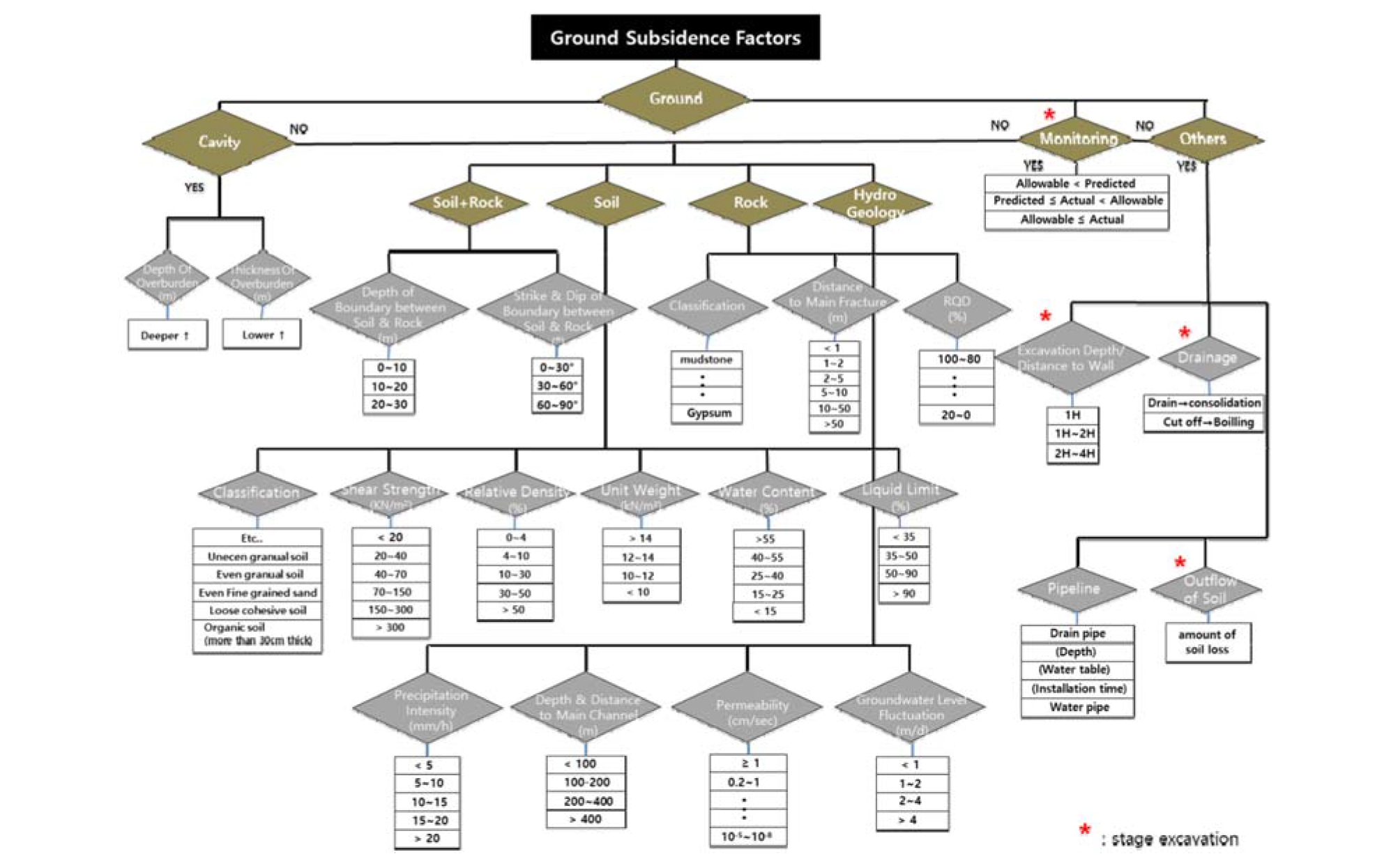
Classification for major factors of ground subsidence on soil, rock and composite ground.

토의

지반함몰에 대한 국내외 사례 조사 및 문헌 분석을 통해 지반함몰에 영향을 주는 수 십 개의 영향인자들 중 굴착공사와 관련되고 더불어 지질학적인 분야에 초점을 두고 검토한 결과, 약 25개의 영향인자를 예비 인자로 선정하였다. 선정된 예비인자를 중심으로 국내외 지반함몰이 발생했거나 발생할 가능성이 있는 지역을 대상으로 연구한 논문 200여 편을 분석 및 검토하였으며 대다수 지반함몰의 주원인으로 거론되는 영향인자는 지하수위 변동, 굴착 중 계측, 흙의 종류, 암석의 종류 및 굴착공사 시 지하수 처리 등의 지반 공학적 인자들로써 예비연구에서 추출한 25개의 예비인자들중 상당수가 주 인자에서 제외되거나 다른 인자들로 대체되었다. 예를 들면 암반 및 암석 종류에서 암석종류로 범위가 좁혀지는 등 인자 내에서 범주를 축소하게 되었다.

본 연구에서 확정한 지반함몰의 인자들은 7개의 범주(category), 즉 공동존재, 흙과 암반, 흙, 암반, 수리, 외부영향 및 굴착 중 침하계측으로 분류하였고, 공동존재의 경우 토피층의 심도와 두께로 구분하며, 흙과 암반의 경우 흙과 암반의 경계면 심도 및 배향으로 구분하며, 흙의 경우 종류, 전단강도, 상대밀도, 건조단위중량, 함수비 및 액성한계로 구분하였고, 암반의 경우 암석 종류, 주 단열과의 거리 및 RQD로 구분하였으며, 수리의 경우 강우 강도, 하천과의 거리와 심도, 투수계수 및 지하수위 변동으로 구분하였고, 외부 영향의 경우 굴착심도와 흙막이 벽과의 거리, 굴착공사시 지하수 처리공법, 상하수로 관로 등 인공시설물 존재 유무 및 흙막이 벽을 통한 토립자 유실 여부로 구분하였으며, 굴착 중 침하계측의 경우 실측 침하량과 허용 침하량의 비교 값으로 구분하였다(Table 1).

본 연구에서 추출한 지반함몰 영향인자 22개를 본 연구에서 이용한 200여 편의 논문에서 인용된 횟수를 근거로 각 지반함몰 영향인자들 간의 영향력(중요도) 순서로 상대적으로 나열해보면 중요도가 가장 높은 순서로 지하수위 변동, 굴착 중 계측, 흙의 종류, 암석의 종류, 굴착 공사 시지하수 처리, 주 단열과의 거리, 상재하중 심도 및 두께, 흙의 전단강도, RQD, 액성한계, 상대밀도, 투수계수, 굴착심도와 흙막이 벽과의 거리, 함수비, 하천과의 거리, 인공시설물 유무, 강우 강도, 흙막이 벽을 통한 토립자 유실 여부, 토사와 암반 경계면의 배향 및 심도, 흙의 건조 단위중량으로 분석되었다(Table 2).

결론

본 연구 결과 지반함몰 영향인자는 총 22개로 도출되었으며, 이 인자들은 7개의 범주로 분류되었다. 22개의 지반함몰 영향인자들 간의 상대적인 중요도 분석 결과 가장 중요도가 높은 인자는 지하수위 변동이며 가장 낮은 인자는 흙의 건조단위중량으로 분석되었다. 지반함몰 영향인자들의 7개 범주와 22개 인자들 간의 상호관계 흐름도는 Fig. 1과 같이 나타낼 수 있다.

향후 지반함몰 인자 22개 각각은 지반함몰 위험 산정을 위한 시트(Ground Subsidence Risk : GSR) 개발을 위해 요소화 및 등급화가 되어야 한다. 다양한 원인으로 발생하는 지반함몰 위험을 예측하는 도구로써 GSR 시트가 유용하게 쓰일 수 있도록 추가적인 연구를 통하여 GSR 시트를 완성할 계획이다.


Acknowledgements

감사의 글

본 연구는 국토교통부 국토교통과학기술진흥원의 건설기술연구사업(지반함몰 발생 및 피해 저감을 위한 지반 안정성 평가 및 굴착·보강 기술개발, 16SCIP-B108153-02)의 지원으로 수행되었으며 이에 깊은 감사를 드립니다.

References

1
Anderson, D. and Cullen, N, 1982, Sewer failures 1981, the full year, WRc external report No73E.
2
Anon, O. H., 1979, Classification of rocks and soils for engineering geological mapping, Part I: Rock and soil materials, Bull. Int. Assoc. Eng. Geol., 19, 364-371.
10.1007/BF02600503
3
Bell, F. G., 2000, Engineering properties of soils and rocks, Blackwell Science Ltd., Oxford.
4
Bell, F. G., Cripps, J. C., and Culshaw, M. G., 1995, The significance of engineering geology to construction, Geological Society, London, Engineering Geology Special Publications, 10.1, 3-29.
5
Boone. S. J., 2004, Analysis of Wall and Ground Movements due to Deep Excavations in Soft Soil Based on a New Worldwide Database, Soil and Foundations, 45(4), 87-98.
6
Bruno, E. and Calcaterra, D., 2008, Development and morphometry of sinkholes in coastal plains of Apulia, southern Italy, Preliminary sinkhole susceptibility assessment, Engineering Geology 99, 198-209.
10.1016/j.enggeo.2007.11.017
7
Carbognin, L., 1984, Case History no 9.3. Venice, Italy, Guidebook to studies of land subsidence due to ground-water withdrawal, International Hydrological Programme, Working Group 8, 161-174.
8
Carbognin, L., Gatto, P., and Mozzi, G., 1984, Case history no. 9.15: Ravenna, italy. Guidebook to studies of land subsidence due to ground-water withdrawal, UNESCO, Paris, 291-305.
9
Casagrande, A., 1938, Notes on soil mechanics:-First semester, Graduate School of Engineering, Harvard University.
10
Charles, N., Erin, W. W., Leung, H. Y., and Lau, C. K., 2004, Inherent anisotropic stiffness of weathered geomaterial and its influence on ground deformations around deep excavations, Canadian Geotechnical Journal 41(1), 12-24.
10.1139/t03-066
11
Cheng, Y., Zhang, J., and Peng, J., 2013, ArcGIS-based evaluation of geo-hazards at Yaozhou County, Shaanxi, China,Journal of Rock Mechanics and Geotechnical Engineering 5(4), 330-334.
10.1016/j.jrmge.2012.11.002
12
Cho, S. H. and Lee, K. S., 2014, Cause of ground subsidence in urban areas case analysis and countermeasures (Overseas Cases), The Journal of Disaster Prevention, 16, 3-60 (in Korean with English Abstract).
13
Choi, S. K. and Baek, S. H., 2016, Geotechnical investigation on the causes and countermeasures of ground subsidence due to tunnel and underground installation, Journal of Korean Tunnelling and Underground Space Association,18(2), 143-154 (in Korean with English Abstract).
10.9711/KTAJ.2016.18.2.143
14
Choi, S. W., 2005, Development and analysis of ground subsidence mechanism, Tunnel and Underground Space, 15(3), 195-212 (in Korean with English Abstract).
15
Choi, W. S. and Kim, E. S., 2015, Ground subsidence of limestone mine saturated with groundwater, The Journal of Engineering Geology, 25(4), 511-524 (in Korean with English Abstract).
10.9720/kseg.2015.4.511
16
Ciotoli, G., Di, L. E., Finoia, M. G., Liperi, L., Meloni, F., Nisio, S., and Sericola, A., 2016, Sinkhole susceptibility, Lazio region, central Italy, Journal of Maps 12(2), 287-294.
10.1080/17445647.2015.1014939
17
Cividini, A., Bonomi, S., Vignati, G. C., and Gioda, G., 2009, Seepage-induced erosion in granular soil and consequent settlements, International Journal of Geomechanics 9(4), 187-194.
10.1061/(ASCE)1532-3641(2009)9:4(187)
18
Clough, G. W. and Thomas D., Clough, G. W., and O'Rourke, T. D., 1990, Construction induced movements of insitu walls. In design and performance of earth retaining structures, ASCE, pp. 439-470.
19
Dobrescu, C. and Siminea, I., 2009. Environmental factors and local soil condition influence related to susceptible soil liquefaction in seismic risk assessment, Annals Food Science and Technology 10(2), 537-542.
20
El-Nahhas, F. M., Mohamed T. A., and George, M. I., 2006, Utilization of grouting techniques for construction of underground structures in urban areas, Int. Symposium on Utilization of Underground Space in Urban Areas, ETS and ITA, Sharm El-Sheikh, 2006.
21
Fang, H. Y., 1991, Foundation engineering handbook, 2nd Ed., Van Nostrand Reinhold, 137p.
10.1007/978-1-4757-5271-710.1007/978-1-4615-3928-5
22
Fenner, R. A. and Sweeting, L., 1999, A decision support model for the Rehablitation of “non-critical” Sewers, Water Science and Technology, 39(9), 193-200.
23
Figueroa V., G. E., 1984, Case history No. 9.8 Mexico, DF, Mexico, Guidebook to studies of land subsidence due to ground-water withdrawal, Studies and Reports in Hydrology 40, 217-232.
24
Finno, R. J. and Michele C., 2005, Supported excavations: observational method and inverse modeling. Journal of Geotechnical and Geoenvironmental Engineering 131(7), 826-836.
10.1061/(ASCE)1090-0241(2005)131:7(826)
25
Finno, R. J., Bryson, S., and Michele, C., 2002, Performance of a stiff support system in soft clay, Journal of Geotechnical and Geoenvironmental Engineering 128(8), 660-671.
10.1061/(ASCE)1090-0241(2002)128:8(660)
26
Fredlund, D. G., Daichao, S., and Zhao, J., 2011, Estimation ofsoil suction from the soil-water characteristic curve, Canadian Geotechnical Journal 48(2), 186-198.
10.1139/T10-060
27
Gabrysch, R. K, 1984, Case history no. 9.12. The houston-galveston region, Texas, USA. Guidebook to studies of land subsidence due to groundwater withdrawal: UNESCO Studies and Reports in Hydrology 20, 253-262.
28
Gibbs, H. J. and Holtz, W. G., 1957, Research on determining the density of sands by spoon penetration testing, Proc. 4th International Conference on Soil Mechanics and Foundation Engineering, London, Vol. 1, pp. 35-39.
29
Gloe, C. S, 1984, Case history No. 9.1. Latrobe Valley, Victoria, Australia. Guidebook to Studies of Land Subsidence Due to Ground-Water Withdrawal, edited by JF Poland: 145-153.
30
Gutierrez, F., Cooper, A. H., and Johnson, K. S., 2008, Identification, prediction and mitigation of sinkhole hazards in evaporite karst area, Engineering Geology, 53, 1007-1022.
10.1007/s00254-007-0728-4
31
Hou, Y., Fang, Q., Zhang, D., and Wong, L. N. Y., 2015, Excavation failure due to pipeline damage during shallow tunnelling in soft ground, Tunnelling and Underground Space Technology 46, 76-84.
10.1016/j.tust.2014.11.004
32
Hu, Z. F., Yue, Z. Q., Zhou, J., and Tham, L. G., 2003, Design and construction of a deep excavation in soft soils adjacent to the Shanghai metro tunnels, Canadian Geotechnical Journal, 40(5), 933-948.
10.1139/t03-041
33
Huang, M. and Song, C., 2013, Upper-bound stability analysisof a plane strain heading in non-homogeneous clay, Tunnelling and Underground Space Technology, 38, 213-223.
10.1016/j.tust.2013.07.012
34
Jang, H. S., 2011, Application of distributed fiber optic cable measurement technique for ground subsidence measurement in mining area, Master’s Thesis, Seoul National University (in Korean with English Abstract).
35
Jesus, G. and Francisco, G., 2008, A sinkhole susceptibility zonation based on paleo karst analysis along a stretch of the Madrid-Barcelona high-speed railway built over gypsum-and salt-bearing evaporites (NE Spain), Engineering Geology, 102, 1-2.
36
Jonathan, D. B., Rodolfo, B. S., Turan, D., Akin, O., Youd, T. Leslie., Jonathan P. S., Raymond, B. S., Onder, K. C., Ertan, B., Baturay, MB., Christensen, C., and Karadayilar, T., 2004, “Subsurface characterization at ground failure sites in Adapazari, Turkey”, Journal of Geotechnical and Geoen-vironmental Engineering, 132(4), 673-685.
37
Karim, M. F., 2005, A note on some geological advantages for construction of underground railway transit system in the city of Dhaka, Geological Survey of Bangladesh, Ministry of Energy and Mineral Resources, Government of the Peoples Republic of Bangladesh, 12p.
38
Kim, J. H., 2014, Experimental study on the ground failure prevention by soft ground excavation, Journal of the Korean Society of Civil Engineers, 34(3), 907-917 (in Korean with English Abstract).
10.12652/Ksce.2014.34.3.0907
39
Kim, J. H., 2016, An experimental study on measurement of soil settlement using 3D monitoring system, Master’s Thesis, Chung-Ang university (in Korean with English Abstract).
40
Kim, J. Y., Jang, H. S., Kim, Y., Hyun, H. J., and Kim, G. S., 1995, Application of seismic tomography to the Investigation of underground structure in Gupo train accident area, The Journal of Engineering Geology, 5(1), 1-20 (in Korean with English Abstract).
41
Korea Geotechnical Society, 2007, Ground disaster and abatement technology, Geotechnical engineering series, 14, Gumi seogwan, 786.
42
Kuliczkowska, E., 2016, The interaction between road traffic safety and the condition of sewers laid under roads, Transportation Research, Part D 48, 203-213.
10.1016/j.trd.2016.08.025
43
Kwon, K. S. and Lee, J. Y., 2001, GIS for ground settlement analysis considering the surface conditions, The Journal of Natural Environmental Geology, 34(6), 595-600 (in Korean with English Abstract).
44
Kwon, K. S. and Park, Y. J., 2001, Stability assessment of building foundation over abandoned mines, Journal of Korean Society for Rock Mechanics, 11(2), 174-181 (in Korean with English Abstract).
45
Lamb, B. and Shiau, J., 2014, A physical and numerical investigation into sinkhole formation, Fourth International Con-ference on Geotechnique, Construction Materials and Environment, Brisbane, Australia, 1-6.
46
Lee, D. Y. and Kim, D. M., 2016, Geotechnical approach to groundwater deposition by sewer pipeline, Korean Geotechnical Society Conference, 3-4 (in Korean with English Abstract).
47
Lee, K. Y. and Lee, S. Y., 2014, Basic study for preparing and using geotechnical ground subsidence risk, Kyung-gi Research Institute, 62, 44p. (in Korean with English Abstract).
48
Leung, E. H. and Ng, C. W., 2007, Wall and ground movements associated with deep excavations supported by cast in situ wall in mixed ground conditions, Journal of Geotechnical and Geoenvironmental Engineering 133(2), 129-143.
10.1061/(ASCE)1090-0241(2007)133:2(129)
49
Liao, H. J. and C. C. Lin, 2009, Case studies on bermed excavation in Taipei silty soil, Canadian Geotechnical Journa l46(8), 889-902.
10.1139/T09-034
50
Liu, G. B., Charles, W. Ng, and Wang, Z. W., 2005, Observed performance of a deep multistrutted excavation in Shanghai soft clays, Journal of Geotechnical and Geoenvironmental Engineering, 131(8), 1004-1013.
10.1061/(ASCE)1090-0241(2005)131:8(1004)
51
Liu, G. B., Jiang, R. J., Ng, C. W., and Hong, Y., 2011, Deformation characteristics of a 38m deep excavation in soft clay, Canadian Geotechnical Journal, 48(12), 1817-1828.
10.1139/t11-075
52
Long, M., 2001, Database for retaining wall and ground movements due to deep excavations, Journal of Geotechnical and Geoenvironmental Engineering 127(3), 203-224.
10.1061/(ASCE)1090-0241(2001)127:3(203)
53
McDonald, S. E., and Zhao, J. Q., 2001, Condition assessment and rehabilitation of large sewers. In Proceedings of Inter-national Conference on Underground Infrastructure Research, 361-369.
54
Min, K. N. and Lee, D. W., 2014, Investigation of ground settlement by mining area in mine area, Korea Disaster Infor-mation Society, Spring Conference, 1, 201-204 (in Koreanwith English Abstract).
55
Moormann, C. H. and Moormann, H. R., 2002, A study of wall and ground movements due to deep excavations in soft soil based on worldwide experiences, Proceedings of the 3rd International Sympozium, Geotechnical Aspects of Under-ground Construction in Soft Ground, 51-56.
56
Muhammad, F., Samgyu, P., Young, S. S., Kim, H. J., Mohammad, T., and Adepelumi, A. A., 2012, Subsurface cavity detection in a karst environment using electrical resistivity (er): a case study from yongweol-ri, South Korea, Earth Sciences Research Journal, 16(1), 75-82.
57
Newton, J. G. 1984, Case history No. 9.11. Alabama, U.S.A. Guidebook to studies of land subsidence due to groundwater withdrawal: Studies and Reports in Hydrology 40, 245-252.
58
Nikolinakou, M. A., Whittle, A. J., Savidis, S., and Schran, U., 2011, Prediction and interpretation of the performance of a deep excavation in Berlin sand, Journal of Geotechnical and Geoenvironmental Engineering 137(11), 1047-1061.
10.1061/(ASCE)GT.1943-5606.0000518
59
Oh, D. W. and Ahn, H. Y., 2016, A study on the range of influence of surface subsidence due to sewer tube failure in sandy soils with various relative density by model test, Korea Geotechnical Society, 32, 19-30 (in Korean with English Abstract).
60
Park, I. J., 2015, Sinhole status and measurements, the Journal of Korea Disaster Prevention Association, 17, 2-63 (in Korean with English Abstract).
61
Paul F. B., 1984, Case history No. 9.9. The Wairakei geothermal field, New Zealand. Guidebook to studies of land subsidence due to ground-water withdrawal: Studies and reports in hydrology 40, 233-240.
62
Perrin, J., Cartannaz, C., Noury, G., and Vanoudheusden, E., 2015, A multicriteria approach to karst subsidence hazard mapping supported by weights-of-evidence analysis, Engineering Geology 197, 296-305.
10.1016/j.enggeo.2015.09.001
63
Poland, J. F, 1984, Case history no. 9.14. Santa Clara valley, California, USA. Guidebook to Studies of Land Subsidence due to Ground-Water Withdrawal. Unesco, Paris, 340.
64
Poland, J. F. and Lofgren, B. E., 1984, Case history 9.13, San Joaquin Valley, California, USA. Guidebook to studies of land subsidence due to groundwater withdrawal: UNESCO Studies and Reports in Hydrology 40, 263-277.
65
Poulsen, B. A. and Shen, B. 2013, Subsidence risk assessment of decommissioned bord-and-pillar collieries. International Journal of Rock Mechanics and Mining Sciences 60, 312-320.
10.1016/j.ijrmms.2013.01.014
66
Powers, J. P., 1992, Construction dewatering, new methods and applications, 2nd ed. John Wiley and Sons, New York, 528p. Prakash, K. and A. Sridharan, 2006, Critical appraisal of the cone penetration method of determining soil plasticity. Canadian Geotechnical Journal 43(8), 884-888.
67
Pritchard, O. G., Stephen, H. H., and Farewell, T. S., 2013, Soil movement in the UK?Impacts on critical infrastructure, Infrastructure Transitions Research Consortium, Working Paper Series, Cranfield University, 73p.
68
Reddy, K. R. and Jeffrey A. A., 2001, Effects of soil heterogeneity on airflow patterns and hydrocarbon removal during in situ air sparging, Journal of Geotechnical and Geoenvironmental Engineering, 127(3), 234-247.
10.1061/(ASCE)1090-0241(2001)127:3(234)
69
Roboski, J. and Richard J. F., 2006, Distributions of ground movements parallel to deep excavations in clay, Canadian Geotechnical Journal, 43(1), 43-58.
10.1139/t05-091
70
Sakai, H. and Maeda, K., 2009, Seepage failure and erosion mechanism of granular material with evolution of air bubbles using SPH. AIP Conference Proceedings, eds. Masami Nakagawa, and stefan luding, 1145(1), AIP, 2009.
10.1063/1.3179811
71
Sayed, M. A. and Ayman, L. F., 2015, Mitigation of risks associated with deep excavation: state of the art review, Industry Academia Collaboration, 6-8 April, 2015(conference paper).
72
Seo, M. W., Olson, S. M., Yang, K. S., and Kim, M. M., 2009, Sequential analysis of ground movements at three deep excavation sites with mixed ground profiles, Journal of Geotechnical and Geoenvironmental Engineering, 136(5), 656-668 (in Korean with English Abstract).
10.1061/(ASCE)GT.1943-5606.0000257
73
Seong, J. H. and Shin C. K., 2008, Analysis of case study for ground subsidence, The Journal of Facility Safety, 31, 70-80(in Korean with English Abstract).
74
Shao, Y. and Emir, J. M., 2008, Information feedback analysis in deep excavations, International Journal of Geomechanics, 8(1), 91-103.
10.1061/(ASCE)1532-3641(2008)8:1(91)
75
Shi, L. X. and Bao, M. F., 1984, Case history No. 9.2; Shanghai, China. Guidebook to studies of land subsidence due to ground-water withdrawal, UNESCO Studies and Reports in Hydrology, 40, 155-160.
76
Shin, J. H. and Park, C., 2004, Evaluation of subsidence stability of limestone area, Korean Society for Rock mechanics, Fall Conference, 1, 159-170. (in Korean with English Abstract).
77
Shu, B. and Baosong M., 2015, Study of ground collapse induced by large-diameter horizontal directional drilling in a sand layer using numerical modeling. Canadian Geotechnical Journal, 52(10), 1562-1574.
10.1139/cgj-2014-0388
78
Singh, K. B., 2007, Pot-hole subsidence in son-Mahanadi master coal basin, Engineering Geology, 89(1), 88-97.
10.1016/j.enggeo.2006.09.011
79
Su, S. F., Liao, H. J., and Lin, Y. H., 1998, Base stability of deep excavation in anisotropic soft clay, Journal of Geotechnical and Geoenvironmental Engineering, 124(9), 809-819.
10.1061/(ASCE)1090-0241(1998)124:9(809)
80
Tan, Y. and Li, M., 2011, Measured performance of a 26m deep top-down excavation in downtown Shanghai. Canadian Geotechnical Journal, 48(5), 704-719.
10.1139/t10-100
81
Thinh, H. P. and Ludmila, A., 2015, Prediction maps of land subsidence caused by groundwater exploitation in Hanoi, Vietnam, Resource Efficient Technologies, 1, 80-89.
10.1016/j.reffit.2015.09.001
82
Toan, N. D. and Luu X. H., 2007, Hanoi metro pilot line project: some aspects of risk management and subsidence, Report at the Meeting between ITA and ITST on Tunnelling, 12p.
83
Tudes, S., 2012, Correlation between geology, earthquake and urban planning, INTECH Open Access Publisher, 417-434.
84
Vallejo, L. I. G. and Ferrer, M., 2011, Geological engineering, CRC Press, Balkema Book, 678p.
85
Vilar, O. M., and Roger, A. R., 2011, Collapse behavior of soil in a Brazilian region affected by a rising water table, Canadian Geotechnical Journal 48(2), 226-233.
10.1139/T10-065
86
Wang, D. L. and Guo, X., 2015, Analysis of open cut method and local coverexcavation method in subway station con-struction, EJGE, 20(4), 1483-1493.
87
Wang, J. H., Xu, Z. H. and Wang, W. D., 2009, Wall and ground movements due to deep excavations in Shanghai soft soils, Journal of Geotechnical and Geoenvironmental Engineering, 136(7), 985-994.
10.1061/(ASCE)GT.1943-5606.0000299
88
Wang, W. D. and Xu, Z. H., 2014, Design and construction of deep excavation in Shanghai, Environmental and Earth Sciences Research Journal, 1, 7-10.
89
Wei, H. and Jun Y., 2013, Gravity pendulum tilting monitor, Applied Mechanics and Materials, 313-314, 613-616.
10.4028/www.scientific.net/AMM.313-314.613
90
Woo, K. S., Eberhardt, E., Elmo, D., and Stead, D., 2013, Empirical investigation and characterization of surface subsidence related to block cave mining, International Journal of Rock Mechanics and Mining Sciences, 61, 31-42.
10.1016/j.ijrmms.2013.01.015
91
Xiancai, H., Wei, L., Donglin, W., 2014, Monitoring and analysis of deep foundation for mingguang road metro station in Hefei, Environmental and Earth Sciences Research Journal,1, 7-10.
10.18280/EESRJ.010102
92
Yamamoto, S., 1984, Case history No. 9.10. Bangkok, Thailand. Guidebook to studies of land subsidence due to ground-water withdrawal, Studies and Reports in Hydrology, 40, 241-244.
93
Yamamoto, S., 1984a, Case History No. 9.4. Tokyo, Japan. Guidebook to studies of land subsidence due to groundwater withdrawal. United Nations Educational, Scientific and Cultural Organization (UNESCO), Paris, 175-184.
94
Yamamoto, S., 1984b, Case History No. 9.5. Osaka, Japan. Guidebook to studies of land subsidence due to groundwater withdrawal. UNESCO, Paris, 185-194.
95
Yamamoto, S., 1984c, Case history No. 9.6. Nobi Plain, Japan. Guidebook to studies of land subsidence due to groundwater withdrawal, UNESCO International Hydrological Programme, Working Group, 8, 195-204.
96
Yamamoto, S., 1984d, Case History No. 9.7. Niigata, Japan. Guidebook to studies of land subsidence due to ground-water withdrawal, UNESCO International Hydrological Programme, Working Group, 8, 205-216.
97
Yetton, M. D., 1986, Investigation and remedial methods for subsurface erosion control in banks peninsula loess, MSc Thesis, University of Canterbury, 231p.
98
Yoo, C. S. and Kim, S. B., 2007, A study on ground subsidence due to groundwater drawdown during tunnelling, The Journal of Korean Tunneling and Underground Space Association, 9(4), 361-375.
99
Yoo, C. S., 2001, Behavior of braced and anchored walls in soils overlying rock, Journal of Geotechnical and Geoen-vironmental Engineering, 127(3), 225-233 (in Korean with English Abstract).
10.1061/(ASCE)1090-0241(2001)127:3(225)
100
Yoo, H. K., 1999, Deformation and subsidence due to excavation of ground supported by underground continuous wall, Journal of Engineering, 8(1), 345-351 (in Korean with English Abstract).
101
Yoon, M. S. and Ahn, D. W., 2011, Estimation of vaccum pressure and prediction of settlement at optimum stage of ground with individual vaccum pressure method, Journal of Land Housing and Urban Affairs, 2(2), 163-170 (in Korean with English Abstract).
10.5804/LHIJ.2011.2.2.163
102
Zhang, S. M., Li, X., Li, D. H., Ding, Z., and Wei, G., 2013, Study on failure mode of underground diaphragm wall in soft soil area. In Applied Mechanics and Materials 405. Trans Tech Publications, 1375-1382.
10.4028/www.scientific.net/AMM.405-408.1375
103
Zhou, Z. Y. and Yu, A. B., 2009, Simulation of the flow and segregation of particle mixtures in liquid fluidization, AIP Conference Proceedings, Eds. masami Nakagawa, and Stefan Luding, 1145(1) AIP, 993-996.
페이지 상단으로 이동하기